Smith and Carney Advance Energy Transition Framework as Landmark Alberta-Pacific Pipeline Deadlines Recalibrated
Alberta Premier Danielle Smith and Prime Minister Mark Carney continue negotiations on their landmark bilateral energy and climate accord, recalibrating early regulatory milestones while keeping construction of a major Pacific export pipeline targeted for late 2027.
Choseno Civic News Desk September 5, 2026 3 min read Alberta, CA
What do you think of the people in this story? Rate them anonymously — tap a face below.
EDMONTON — Bilateral energy negotiations between the Government of Alberta and federal authorities in Ottawa are advancing into a critical implementation phase, as Premier Danielle Smith and Prime Minister Mark Carney work to reconcile industrial carbon pricing schedules with accelerated regulatory approvals for a proposed Pacific crude oil export corridor.
The negotiations stem from the landmark federal-provincial energy and climate Memorandum of Understanding (MOU) signed between Premier Smith and Prime Minister Carney. Commonly characterized in Canadian political circles as an historic grand bargain, the bilateral pact links Alberta's commitment to industrial decarbonization—including binding methane reduction protocols and carbon pricing reforms—with federal backing for national-interest energy infrastructure capable of transporting more than one million barrels per day of Western Canadian crude to Asian tidewater markets.
Addressing the status of intergovernmental working groups this week, Premier Smith confirmed that while long-term construction schedules remain targeted for as early as September 2027, several early administrative deadlines have been extended to accommodate complex technical negotiations.
The primary point of discussion centers on the calibration of Alberta’s Technology Innovation and Emissions Reduction (TIER) regulation, specifically the trajectory toward an industrial carbon benchmark price of $130 per tonne, as well as formal emissions-reduction agreements with the Pathways Alliance consortium of oil sands producers.
This agreement represents the most consequential economic and energy collaboration between Alberta and Ottawa in a generation, Premier Smith stated. When establishing a regulatory framework for nation-building infrastructure alongside sophisticated carbon capture and storage architectures, getting the economic mechanics right is vastly more important than rushing an artificial administrative calendar. Our shared goal of opening new global markets for Canadian energy while decarbonizing production remains fully intact.
Under the proposed corridor design, the pipeline would largely utilize existing right-of-way alignments across Alberta and British Columbia, terminating at an expanded deep-water marine terminal along the Pacific coastline. Federal officials have championed the initiative as an indispensable hedge against foreign trade volatility, particularly as protectionist tariff actions across North America underscore the urgent necessity of diversifying Canadian resource exports beyond traditional United States refiners.
However, the framework continues to navigate intricate jurisdictional, environmental, and political crosscurrents. In British Columbia, municipal leaders, environmental organizations, and Indigenous communities along the proposed route have emphasized that any new transport infrastructure must undergo comprehensive environmental impact assessments and uphold statutory duty-to-consult obligations under the United Nations Declaration on the Rights of Indigenous Peoples (UNDRIP).
First Nations equity participation has emerged as a cornerstone of the negotiations, with both governments exploring commercial structures that would grant Indigenous communities direct co-ownership stakes and long-term revenue sharing throughout the project lifecycle.
In Ottawa, federal policymakers have maintained that economic competitiveness and rigorous environmental stewardship must proceed in lockstep. The Carney administration has emphasized that predictable regulatory pathways for capital-intensive clean energy and carbon management projects will ensure Canada maintains global investment confidence while meeting statutory net-zero trajectories.
As federal-provincial negotiating teams finalize implementation protocols ahead of upcoming parliamentary and legislative sessions, the Smith-Carney agreement continues to test whether cooperative federalism can successfully bridge regional economic interests and national climate mandates.
Rate the people mentioned in this article


Related Coverage in Energy & Environment
See all Energy & Environment newsEnergy & Environment
CA Sep 4, 2026
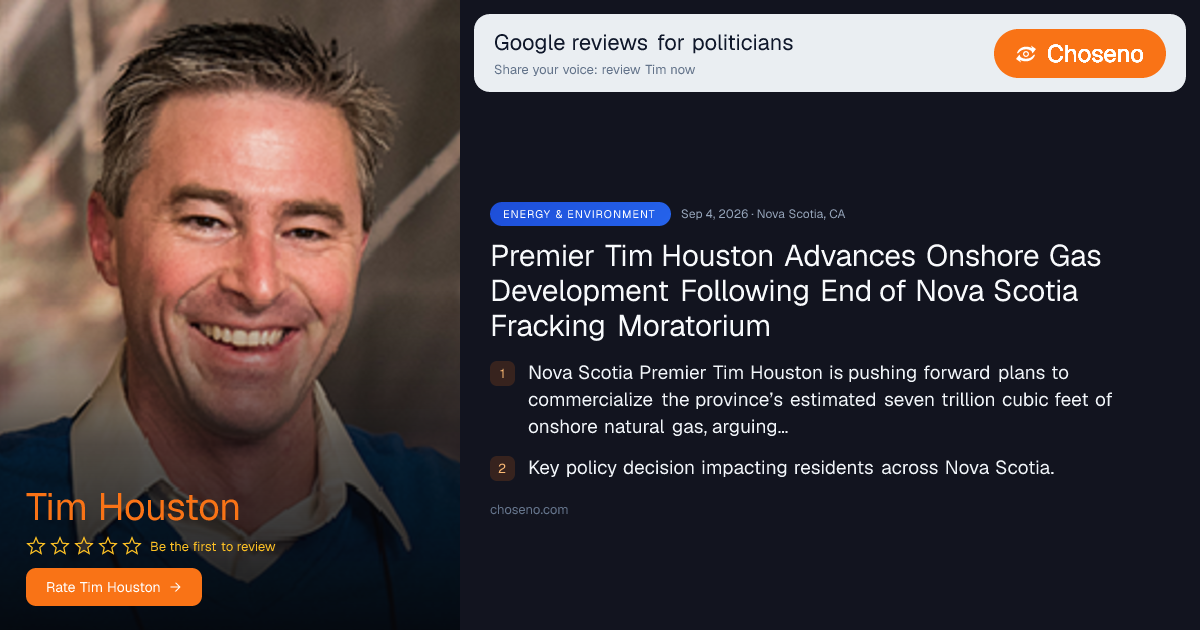
Premier Tim Houston Advances Onshore Gas Development Following End of Nova Scotia Fracking Moratorium
Nova Scotia Premier Tim Houston is pushing forward plans to commercialize the province’s estimated seven trillion cubic feet of onshore natural gas, arguing that ending the decade-long hydraulic fracturing moratorium will fund healthcare and bolster regional energy autonomy.
Read full article
Energy & Environment
CA Sep 4, 2026
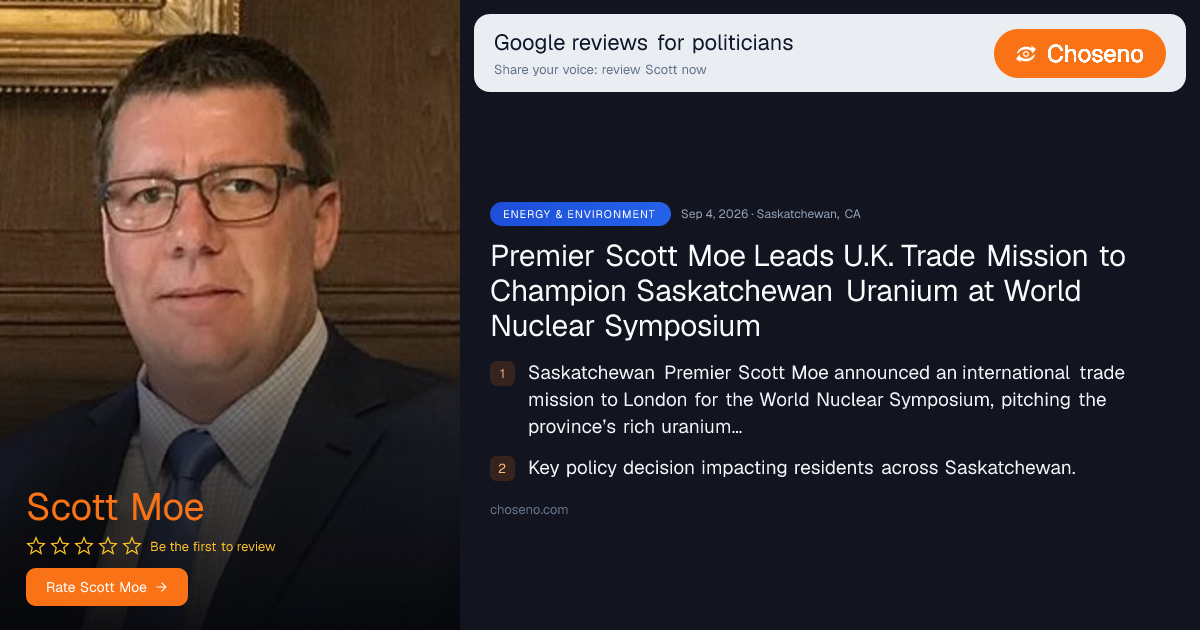
Premier Scott Moe Leads U.K. Trade Mission to Champion Saskatchewan Uranium at World Nuclear Symposium
Saskatchewan Premier Scott Moe announced an international trade mission to London for the World Nuclear Symposium, pitching the province’s rich uranium reserves and emerging small modular reactor supply chain as exports to the U.K. surge 178 percent.
Read full article
Energy & Environment
US Sep 4, 2026
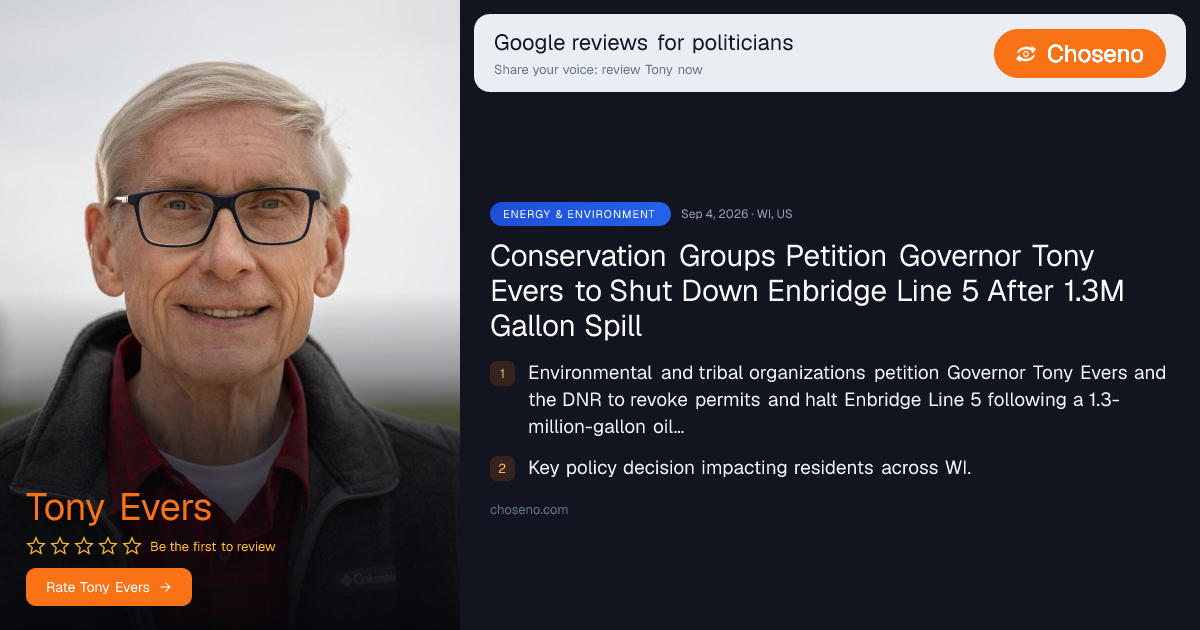
Conservation Groups Petition Governor Tony Evers to Shut Down Enbridge Line 5 After 1.3M Gallon Spill
Environmental and tribal organizations petition Governor Tony Evers and the DNR to revoke permits and halt Enbridge Line 5 following a 1.3-million-gallon oil spill in Saxon and disputes over site access.
Read full article