Arizona Executive Shift Marks New Stance on Tohono O’odham Border Sovereignty
The Arizona Governor has formally aligned with the Tohono O’odham Nation to oppose federal border wall construction on tribal territory. This decision highlights a significant pivot in state-level policy regarding federal land management and indigenous sovereignty.
Choseno Civic News Desk September 24, 2026 3 min read Arizona, US
The recent decision by the Arizona Governor to support the Tohono O’odham Nation in their opposition to border wall construction on tribal lands represents a pivotal shift in the state’s approach to federal infrastructure projects. For years, the Tohono O’odham Nation has maintained that the installation of physical barriers along their southern border would cause irreparable harm to sacred sites, disrupt local wildlife corridors, and infringe upon the sovereign rights of the tribe. By aligning with the tribal leadership, the Governor has signaled a departure from previous state-level support for aggressive federal border fortification strategies that often bypass local consultation. This move acknowledges the unique legal status of the reservation, which spans a significant portion of the international boundary, and emphasizes the necessity of respecting tribal autonomy when federal agencies propose large-scale environmental and structural changes. The administration has indicated that the state will prioritize collaborative dialogue with tribal governments over unilateral federal mandates that fail to account for the specific cultural and historical context of the border region.
From a statutory and legal perspective, the conflict centers on the tension between federal authority over national security and the treaty-protected rights of the Tohono O’odham people. The tribe has long argued that the federal government’s attempts to expedite wall construction through the use of waivers for environmental and cultural protection laws are fundamentally unjust. By siding with the Nation, the Governor is effectively challenging the federal government’s reliance on these waivers, suggesting that the state views the protection of tribal heritage as a matter of public interest. This stance carries significant weight, as it complicates the federal government’s ability to claim that border security measures enjoy broad regional support. The Governor’s office has communicated that the state is prepared to leverage its influence to ensure that any future border security initiatives are conducted with full transparency and in accordance with the principles of tribal sovereignty, rather than through the imposition of federal will without local consent.
Economically, the stakes for the state and the local communities are substantial, as the construction of a border wall involves massive taxpayer expenditures and long-term maintenance costs that often fall on regional infrastructure. Critics of the wall have pointed out that the financial resources dedicated to physical barriers could be more effectively utilized for technological surveillance, personnel, and community-based security programs that do not require the destruction of sensitive ecosystems. The Governor’s support for the tribe suggests a recognition that the economic health of the region is inextricably linked to the preservation of the land and the stability of the communities that reside there. By opposing the wall, the state is signaling that it values the long-term environmental and cultural integrity of the borderlands over the short-term political optics of physical barrier construction. This economic argument is bolstered by the potential for litigation and delays that often accompany projects that ignore the concerns of indigenous populations, which can lead to significant cost overruns for the federal government.
Community debates surrounding this issue remain intense, reflecting a broader national divide over how to best manage the border while upholding human rights and environmental standards. Supporters of the Governor’s decision argue that it is a necessary step toward rectifying historical injustices and fostering a more respectful relationship between the state and the Tohono O’odham Nation. Conversely, some proponents of stricter border enforcement express concern that any opposition to physical barriers could be interpreted as a weakening of national security protocols. However, the Governor’s administration has countered these concerns by emphasizing that security and sovereignty are not mutually exclusive. Instead, the state is advocating for a nuanced approach that respects the unique geography and cultural landscape of the Tohono O’odham territory. As the situation evolves, the alignment between the state and the tribe will likely serve as a critical case study for how regional governments can influence federal policy to better reflect the needs and rights of indigenous communities in the face of national security pressures.
Rate the people mentioned in this article

Related Coverage in Municipal
See all Municipal newsMunicipal
US Sep 27, 2026
‘Love Dogs But…’: Florida Gov Candidate Byron Donalds’ Shelter Video Sparks Skepticism on the Trail
‘Love Dogs But…’: Florida Gov Candidate Byron Donalds’ Shelter Video Sparks Skepticism on the Trail The Nerd Stash
Read full article

Municipal
US Sep 27, 2026
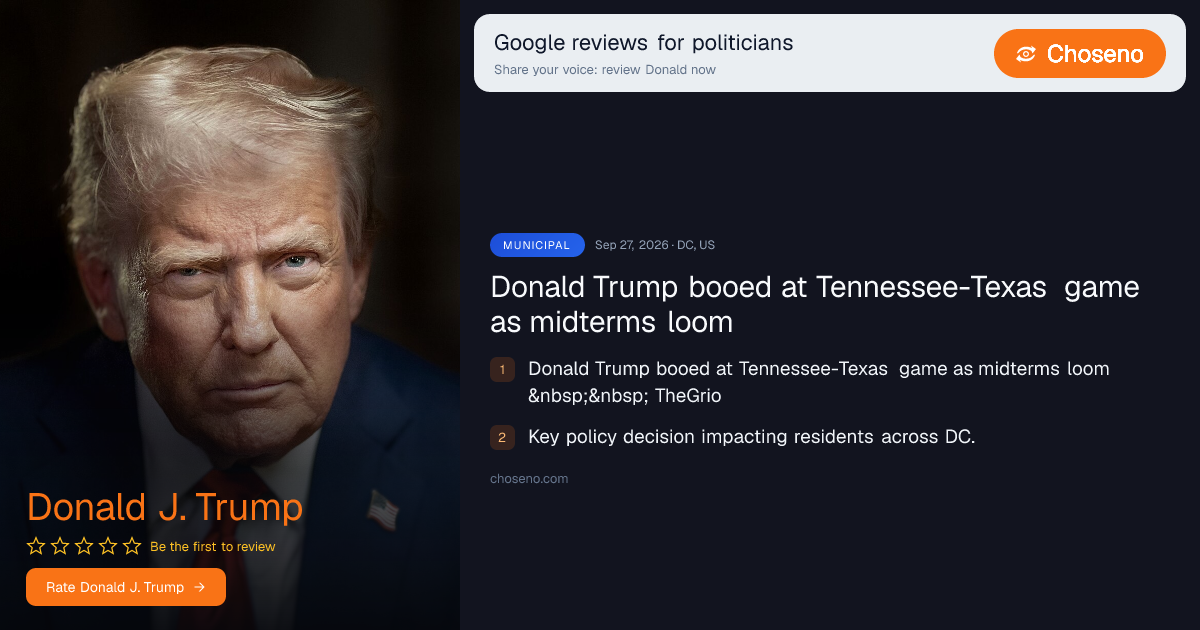
Donald Trump booed at Tennessee-Texas game as midterms loom
Donald Trump booed at Tennessee-Texas game as midterms loom TheGrio
Read full article
Municipal
US Sep 27, 2026
President Donald Trump Attends Presidents Cup in Democratic Stronghold
President Donald Trump Attends Presidents Cup in Democratic Stronghold 조선일보
Read full article