California Legislature Approves AB 2122 to Prohibit Incarceration for Unpaid Minor Infractions
State lawmakers have sent Assembly Bill 2122 to Governor Gavin Newsom, barring municipal courts from issuing bench warrants and jailing individuals for failure to appear or pay fines on non-jailable civil infractions and traffic offenses.
Choseno Civic News Desk September 4, 2026 2 min read CA, US
What do you think of the people in this story? Rate them anonymously — tap a face below.
The California State Legislature has approved landmark criminal justice legislation barring superior courts from issuing arrest warrants or ordering jail sentences for individuals who fail to appear or pay administrative fines on minor, non-jailable civic infractions.
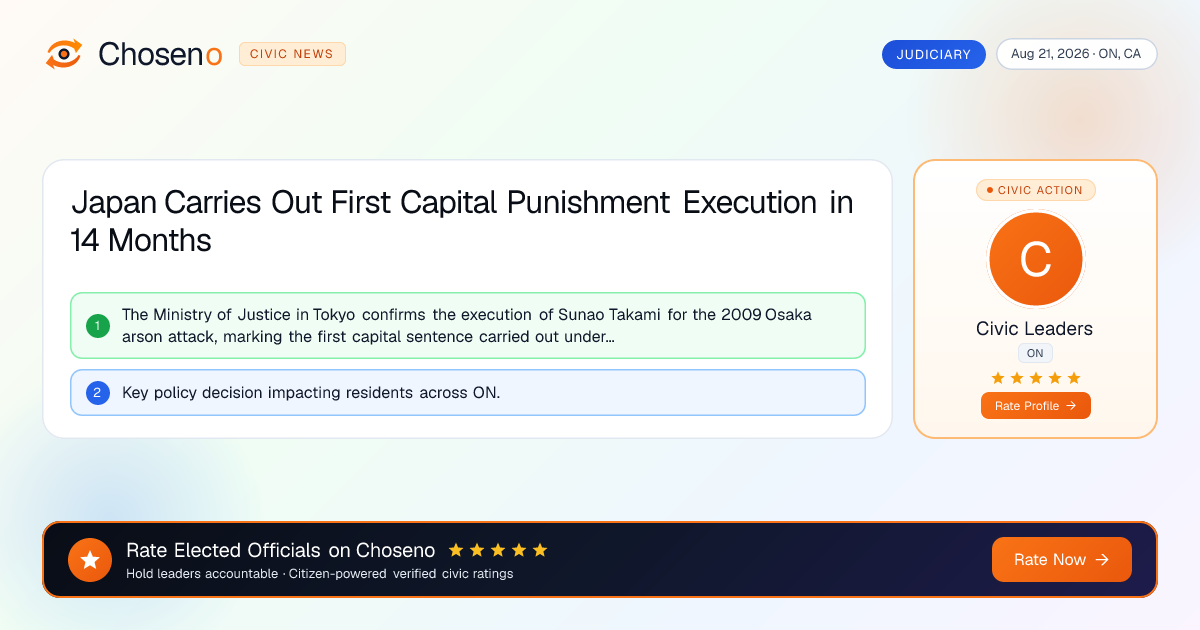
Assembly Bill 2122, authored by Assemblymember Ash Kalra (D-San Jose) and supported by a wide coalition of civil liberties organizations and public defender offices, received final approval in the State Senate before transmitting to Governor Gavin Newsom for executive action ahead of the September 30 statutory signing deadline.
Under existing California penal codes, while low-level infractions—such as jaywalking, operating a street vending stand without a permit, fishing without an updated license, or driving with an expired vehicle registration or defective taillight—do not carry statutory jail sentences upon conviction, an individual failure to pay associated court surcharges or appear at scheduled traffic hearings could trigger the issuance of bench warrants for misdemeanor contempt of court. In practice, advocates argue that this mechanism has effectively funneled thousands of low-income motorists and working-class residents into county jail facilities over unmanageable civil financial debts.
AB 2122 prohibits judicial officers from issuing arrest warrants solely predicated on failure to appear or unpaid civil assessments for non-jailable infractions. Instead, the statute instructs judicial districts and collection agencies to utilize standard civil debt collection mechanisms, including tax return offsets, administrative wage garnishments, and non-punitive payment installment agreements.
Jailing individuals over minor administrative tickets and unpaid debts is economically devastating for families and counterproductive for local taxpayers, Assemblymember Kalra stated following the bill passage. AB 2122 ensures our county correctional facilities are reserved for public safety threats rather than serving as modern debtors prisons for working Californians unable to pay exorbitant traffic fees.
The legislation encountered opposition from law enforcement associations, including the California State Sheriffs Association, which argued that bench warrants serve as an essential compliance mechanism ensuring individuals respond to lawful court citations. Law enforcement representatives cautioned that removing bench warrant remedies could diminish compliance rates with court dates and weaken accountability for repeated municipal code violations.
Governor Newsom office has taken the bill under review alongside hundreds of measures enacted during the final legislative push in Sacramento. If signed into law, the measure will take effect on January 1, requiring the Judicial Council of California to issue updated statewide warrant clearing instructions to superior court clerks and county sheriff departments across all 58 counties.
Rate the people mentioned in this article

Related Coverage in Judiciary
See all Judiciary newsJudiciary
US Sep 4, 2026
Federal Judge Dismisses Justice Department Challenge to California Transgender Athletics Law
A federal judge has dismissed a Department of Justice lawsuit seeking to withhold federal education funds over California’s statutory protections for transgender student athletes, prompting a sharp defense of state educational sovereignty from Governor Gavin Newsom.
Read full article

Judiciary
US Aug 23, 2026
Texas District Court Rejects Retrial Motion in High-Profile High School Track Facility Incident
A Texas state judge denied a motion for a new trial for Karmelo Anthony, upholding a 25-year conviction following extensive legal arguments over jury instructions and evidence admissibility.
Read full article
Judiciary
CA Aug 21, 2026
Japan Carries Out First Capital Punishment Execution in 14 Months
The Ministry of Justice in Tokyo confirms the execution of Sunao Takami for the 2009 Osaka arson attack, marking the first capital sentence carried out under the current cabinet.
Read full article