Emerging Executive Synergy: Analyzing the Strategic Viability of a Moore-Beshear 2028 Democratic Ticket
Political analysts are evaluating a potential 2028 presidential pairing between Maryland Governor Wes Moore and Kentucky Governor Andy Beshear as a means to unify urban progressives and rural moderates. The hypothetical ticket seeks to leverage Moore's visionary social equity programs alongside Beshear's proven record of bipartisan governance in a conservative stronghold.
Choseno Civic News Desk September 24, 2026 4 min read Kentucky, US
What do you think of the people in this story? Rate them anonymously — tap a face below.
The political landscape for the 2028 presidential cycle is already beginning to take shape as analysts and party insiders evaluate the potential of a joint ticket featuring Maryland Governor Wes Moore and Kentucky Governor Andy Beshear. According to recent reporting from the Baltimore Sun, this hypothetical pairing represents a strategic attempt by the Democratic Party to bridge the divide between its urban, progressive base and the more moderate, rural voters of the American heartland. Observers suggest that Moore brings a dynamic, visionary energy rooted in his background as a veteran and non-profit executive, while Beshear offers a proven track record of winning in a deeply conservative state. This early speculation highlights a growing desire within the party for a generational shift toward leaders who can articulate a cohesive national vision while demonstrating practical executive competence in diverse political environments. The strategic logic suggests that such a ticket could neutralize traditional Republican advantages in the South and Midwest while maintaining high enthusiasm among younger, more diverse voting blocs in coastal regions.
In Maryland, Governor Moore has utilized his executive authority to advance a policy framework centered on the concept of leaving no citizen behind, which includes significant investments in public education and workforce development. His administration has prioritized the implementation of a service-year option for high school graduates, a first-of-its-kind program designed to foster civic engagement and provide vocational pathways for those not immediately pursuing a four-year degree. Furthermore, Moore has faced substantial fiscal challenges, including the need to address a looming structural deficit while funding ambitious transportation projects and responding to the economic fallout from the Francis Scott Key Bridge collapse. His supporters argue that his ability to manage these crises while maintaining a focus on long-term equity goals demonstrates the kind of steady leadership required at the federal level. However, critics within the state legislature have raised concerns regarding the sustainability of his spending plans and the potential for future tax increases to cover expanding social mandates, creating a complex economic narrative that would be scrutinized on a national stage.
Across the country in Kentucky, Governor Beshear has carved out a unique political identity by focusing on what he describes as kitchen-table issues that transcend partisan lines. His tenure has been defined by a series of high-stakes executive actions, including the restoration of voting rights for over a hundred thousand formerly incarcerated individuals and the frequent use of his veto power to challenge legislation he deems harmful to public health or education. Beshear has successfully overseen a period of record-breaking economic investment in the Commonwealth, particularly within the electric vehicle battery manufacturing sector, which he credits to a collaborative approach with private industry and a focus on infrastructure. Despite facing a legislature with a veto-proof Republican majority, he has maintained high approval ratings by positioning himself as a pragmatic defender of the middle class. This ability to navigate a hostile political climate is seen by many national strategists as a vital asset for a potential national ticket seeking to reclaim voters in the Rust Belt and the South who have felt alienated by the national party.
The economic stakes of a Moore-Beshear ticket would likely center on a synthesis of their respective state-level successes, focusing on industrial revitalization and the reduction of the racial wealth gap. Moore’s emphasis on closing the prosperity divide through targeted state interventions complements Beshear’s focus on securing large-scale federal infrastructure grants and private capital for traditional manufacturing hubs. Together, they represent a shift toward a more interventionist economic policy that seeks to use government partnerships to stimulate local economies and create high-paying union jobs. Taxpayer concerns remain a central point of debate, as both governors have had to justify significant public expenditures for long-term projects. In Kentucky, the focus has been on ensuring that state incentives for corporations result in tangible benefits for local communities, while in Maryland, the debate often revolves around the efficiency of state agencies in delivering services. This dual focus on equity and efficiency could form the backbone of their national economic platform, aiming to appeal to both fiscal moderates and social progressives.
As the 2028 conversation evolves, the potential for a Moore-Beshear ticket will depend heavily on their ability to maintain their current momentum and navigate the internal dynamics of the Democratic National Committee. Community debates within the party often fluctuate between the need for ideological purity and the necessity of broad-based appeal. While some progressive activists may question whether Beshear’s moderate stance on certain issues aligns with the party’s national platform, others argue that his success in a red state is the ultimate proof of his viability. Similarly, Moore’s relatively short time in elected office is frequently weighed against his undeniable charisma and intellectual depth. Ultimately, the Baltimore Sun indicates that the emergence of these two governors as potential running mates reflects a broader search for a leadership style that is both aspirational and grounded in the daily realities of American life, signaling a possible new direction for the party’s future as it prepares for the post-2024 political era.
Rate the people mentioned in this article


Related Coverage in Municipal
See all Municipal newsMunicipal
US Sep 27, 2026
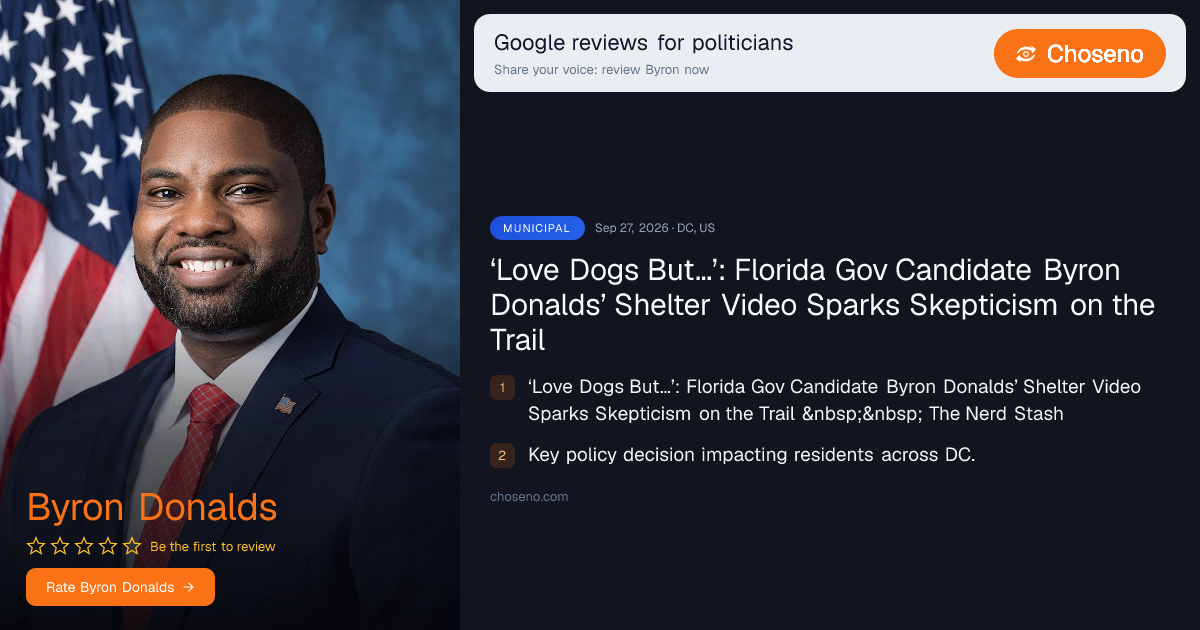
‘Love Dogs But…’: Florida Gov Candidate Byron Donalds’ Shelter Video Sparks Skepticism on the Trail
‘Love Dogs But…’: Florida Gov Candidate Byron Donalds’ Shelter Video Sparks Skepticism on the Trail The Nerd Stash
Read full article
Municipal
US Sep 27, 2026
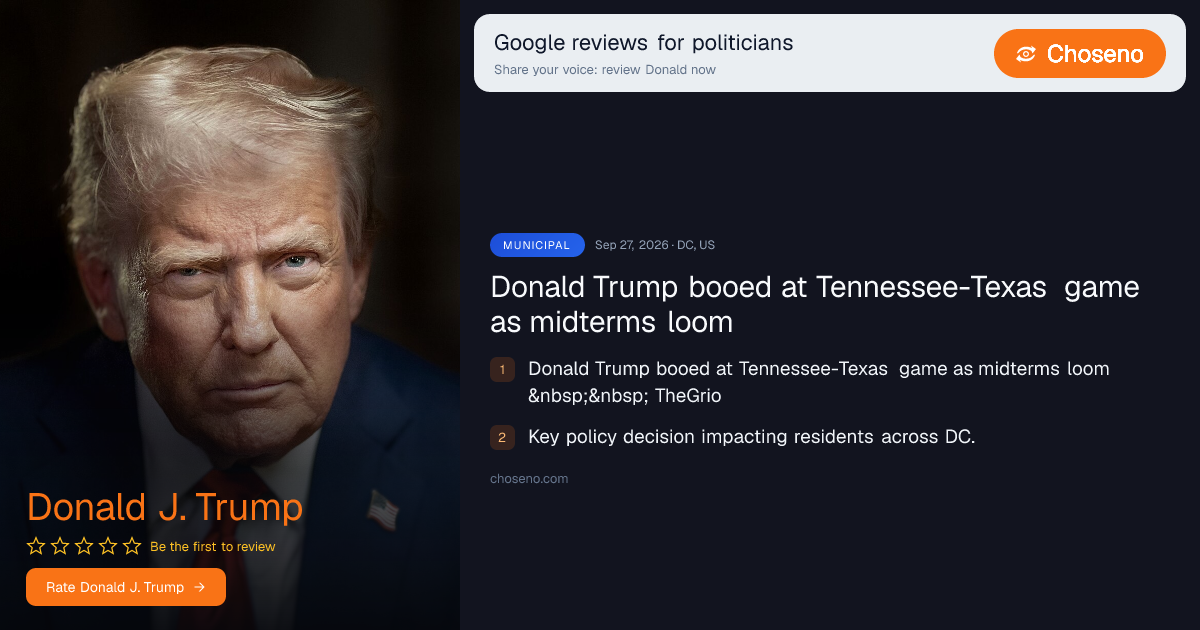
Donald Trump booed at Tennessee-Texas game as midterms loom
Donald Trump booed at Tennessee-Texas game as midterms loom TheGrio
Read full article
Municipal
US Sep 27, 2026
President Donald Trump Attends Presidents Cup in Democratic Stronghold
President Donald Trump Attends Presidents Cup in Democratic Stronghold 조선일보
Read full article