Evaluating the 2028 Prospects of Governors Wes Moore and Andy Beshear Through an Analytical Lens
Political analysts are increasingly examining Maryland Governor Wes Moore and Kentucky Governor Andy Beshear as potential running mates for the 2028 presidential election. This speculative ticket brings together two prominent Democratic executives known for navigating deeply divergent political landscapes.
Choseno Civic News Desk September 24, 2026 3 min read Kentucky, US
What do you think of the people in this story? Rate them anonymously — tap a face below.
As the national political landscape begins looking toward the 2028 presidential cycle, prominent political commentators and strategists are actively evaluating the executive records of Maryland Governor Wes Moore and Kentucky Governor Andy Beshear. Observers note that this potential pairing merges two distinct styles of executive leadership within the Democratic Party, capturing considerable attention from political insiders across the country. Governor Moore, who assumed office in Maryland following a career in business, nonprofit leadership, and military service, has focused his tenure on economic development, public safety initiatives, and overhauling state infrastructure. Meanwhile, Governor Beshear has successfully governed Kentucky, a historically conservative state, winning two gubernatorial terms by emphasizing popular economic policies, infrastructure funding, and crisis management during natural disasters and the coronavirus pandemic. Political analysts suggest that pairing a charismatic leader from the Mid-Atlantic with a proven winner from the South-Central region could offer a compelling geographic and demographic balance for a future national ticket, though both officials have repeatedly emphasized that their primary focus remains strictly on serving their respective constituents and fulfilling their current gubernatorial mandates.
The statutory contexts and executive actions defining both leaders' administrations provide substantial material for national evaluation. In Maryland, Governor Moore has advanced a sweeping legislative agenda centered on youth service programs, environmental sustainability targets, and fiscal responsibility, working closely with a Democratic-controlled General Assembly to pass landmark measures. His administration has consistently highlighted job creation and economic competitiveness, aiming to position Maryland as a regional hub for technology and innovation. Conversely, Governor Beshear has operated in a vastly different institutional environment, routinely navigating a Republican supermajority in the Kentucky General Assembly. Despite these structural hurdles, Beshear has brokered compromises on economic development packages that successfully brought massive manufacturing and electric vehicle battery investments to the Commonwealth, while also utilizing executive authority to restore voting rights to non-violent felons and expand healthcare access. These contrasting governing styles illustrate how each executive has managed legislative friction, offering voters and party strategists two distinct models of executive competence and cross-party negotiation.
From an economic and taxpayer perspective, the potential national ambitions of Moore and Beshear bring critical fiscal management records under the microscope. In Maryland, state fiscal analysts have monitored budget allocations closely as Moore implements ambitious social programs alongside major transit investments, such as the Red Line transit project in Baltimore. Taxpayer advocates and fiscal conservatives have raised questions regarding long-term structural deficits and the sustainability of expanding state expenditures without concurrent revenue enhancements, prompting ongoing debates in Annapolis over state spending priorities. In Kentucky, Governor Beshear has repeatedly touted historic budget surpluses, record low unemployment rates, and substantial investments in public education and clean water infrastructure, framing his administration as a steward of prudent financial management that delivers tangible returns for working families. These differing economic narratives provide a robust foundation for political analysts examining how either governor would address broader federal fiscal challenges, national taxation policies, and the allocation of federal resources to state and local governments.
Beyond fiscal policy, community debates and public sentiment surrounding both governors reflect the complex ideological dynamics within the contemporary Democratic coalition. Supporters of a hypothetical Moore and Beshear ticket argue that it would effectively bridge the gap between progressive urban centers and rural or suburban working-class voters who have increasingly drifted toward the Republican Party. Proponents point to Beshear's proven ability to win over skeptical voters in a red state as a blueprint for national electoral success, while praising Moore's inspiring rhetorical style and historic status as Maryland's first African American governor. However, skeptics and rival political camps caution that translating state-level success to the national stage remains fraught with uncertainty. Critics from both the left and right scrutinize specific policy compromises, executive appointments, and legislative battles from both administrations, arguing that a national campaign would force both leaders to clarify their stances on contentious federal issues ranging from immigration enforcement to foreign policy. As discussions surrounding the 2028 cycle continue to evolve, the actions and policy outcomes emerging from both the Annapolis and Frankfort statehouses will undoubtedly serve as crucial barometers for the future direction of national politics.
Rate the people mentioned in this article


Related Coverage in Municipal
See all Municipal newsMunicipal
US Sep 27, 2026
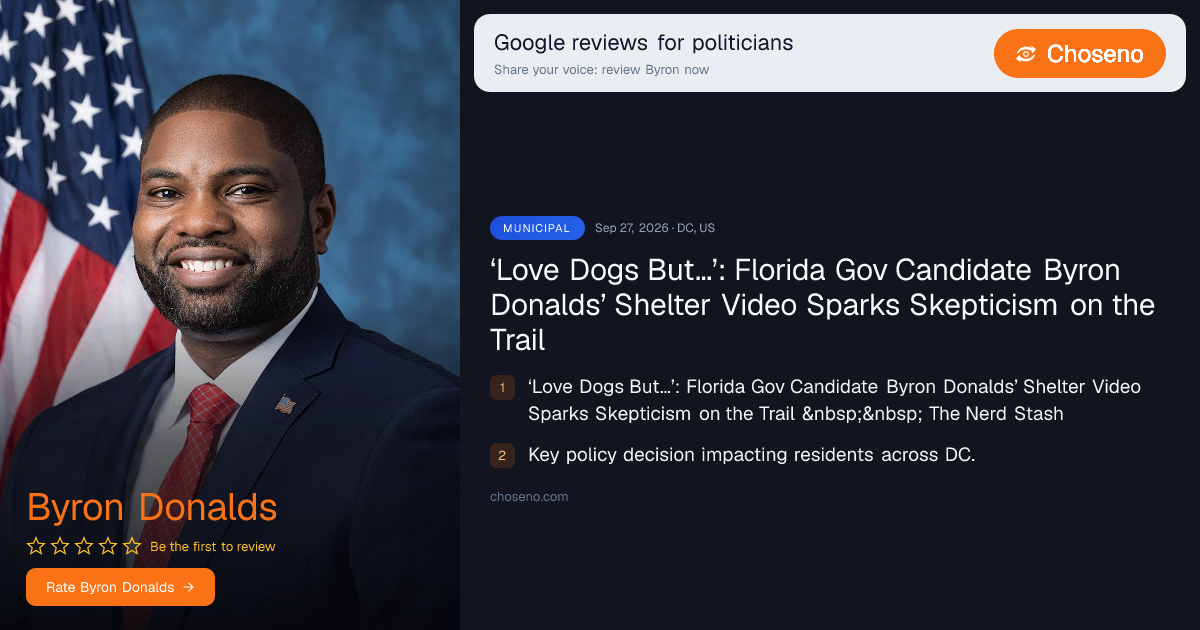
‘Love Dogs But…’: Florida Gov Candidate Byron Donalds’ Shelter Video Sparks Skepticism on the Trail
‘Love Dogs But…’: Florida Gov Candidate Byron Donalds’ Shelter Video Sparks Skepticism on the Trail The Nerd Stash
Read full article
Municipal
US Sep 27, 2026
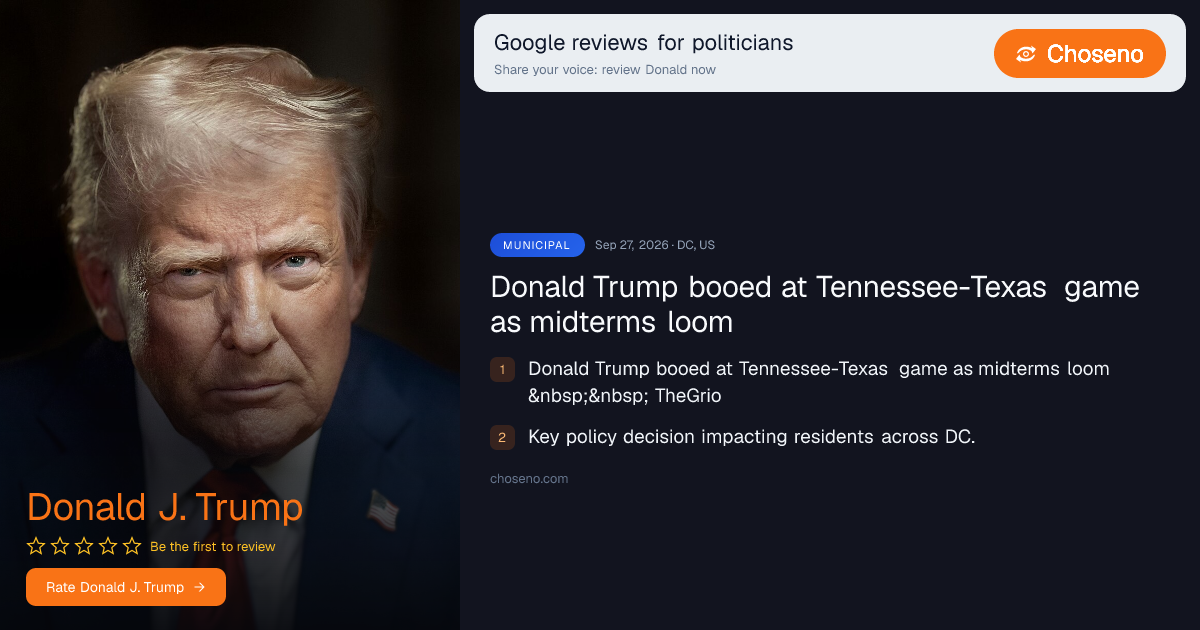
Donald Trump booed at Tennessee-Texas game as midterms loom
Donald Trump booed at Tennessee-Texas game as midterms loom TheGrio
Read full article
Municipal
US Sep 27, 2026
President Donald Trump Attends Presidents Cup in Democratic Stronghold
President Donald Trump Attends Presidents Cup in Democratic Stronghold 조선일보
Read full article