Foreign Influence Concerns Mount as Quebec Premier Addresses Alleged External Interference in Provincial Sovereignty
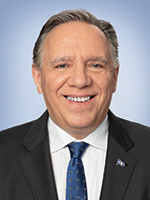
Quebec Premier François Legault has raised alarms regarding documented efforts by a United States-based think tank to influence provincial politics and promote independence. The situation highlights growing anxieties over foreign interference in Canadian democratic processes as the province approaches a pivotal electoral cycle.
Choseno Civic News Desk September 26, 2026 3 min read CA
The political landscape in Quebec has been significantly unsettled following the emergence of a strategic document originating from a United States-based think tank that outlines a deliberate roadmap for fostering provincial independence. Premier François Legault has publicly addressed these revelations, characterizing the findings as a serious attempt by external actors to sow discord and manipulate the internal democratic processes of the province. The document reportedly details a comprehensive plan to bolster the Parti Québécois, aiming to facilitate their return to power as a vehicle for achieving sovereignty. This development has triggered an immediate and intense reaction from provincial leadership, who argue that such interference represents a fundamental violation of democratic norms and an unacceptable intrusion into the domestic affairs of a sovereign nation. The Premier emphasized that the stability of the federation is a matter for the people of Quebec and Canada to determine without the clandestine influence of foreign entities seeking to advance their own geopolitical interests through the fragmentation of a neighboring state.
From a statutory and constitutional perspective, the revelation has prompted calls for a deeper investigation into how foreign organizations interact with local political movements. Legal experts and government officials are currently evaluating whether these activities breach existing regulations regarding foreign funding and political advocacy. The economic implications for taxpayers are substantial, as the prospect of renewed constitutional uncertainty threatens to destabilize markets and complicate long-term fiscal planning. If the political climate is intentionally agitated by external forces, the resulting volatility could lead to capital flight, reduced investor confidence, and a significant diversion of public resources toward managing political crises rather than addressing pressing social and economic needs. The provincial government is now under pressure to demonstrate that it can maintain institutional integrity while navigating these complex geopolitical currents, ensuring that the electoral process remains insulated from foreign manipulation that could undermine the collective prosperity of the province.
Community debates across Quebec have intensified as citizens grapple with the implications of these reports. While some segments of the population view the prospect of sovereignty as a legitimate political aspiration, there is widespread concern regarding the legitimacy of a movement that appears to be receiving strategic guidance or encouragement from foreign think tanks. The discourse has shifted toward the necessity of transparency in political financing and the importance of safeguarding the democratic process from external actors who may not have the best interests of the local population at heart. Critics of the alleged interference argue that the sovereignty movement should be a purely domestic endeavor, free from the influence of foreign policy agendas that might seek to weaken Canada for strategic gain. This sentiment has fostered a rare moment of cross-partisan concern, with various political factions acknowledging that the integrity of the provincial election must be protected against any form of external subversion.
As the electoral cycle approaches, the provincial government is expected to implement more rigorous oversight mechanisms to monitor and mitigate the influence of foreign entities. The Premier has signaled that his administration will not tolerate efforts to destabilize the province, suggesting that further legislative measures may be required to ensure that political discourse remains authentic and locally driven. This situation serves as a stark reminder of the vulnerabilities inherent in modern democratic systems, where digital connectivity and globalized political networks can be exploited to amplify division. The challenge for Quebec leadership lies in balancing the need for open political debate with the imperative to protect the province from being used as a pawn in larger international power struggles. Ultimately, the focus remains on ensuring that the upcoming election reflects the genuine will of the electorate, untainted by the strategic machinations of foreign organizations that seek to alter the course of Canadian history for their own objectives.
Rate the people mentioned in this article
Related Coverage in Politics
See all Politics newsPolitics
US Sep 27, 2026
New Laird Law Expands Access to Long-Acting HIV Prevention Medicine
New Laird Law Expands Access to Long-Acting HIV Prevention Medicine Senator John Laird (.gov)
Read full article

Politics
US Sep 27, 2026
Manchin says 'if character means anything, you can't vote for Ken Paxton'
Former Sen. Joe Manchin (I-W.Va.) took aim at Senate candidate and Texas Attorney General Ken Paxton (R) on Sunday, deriding his “character.” During an interview with NewsNation’s Chris Stirewalt on “The Hill Sunday,” Manchin was asked about Texas Democratic Senate candidate James Talarico. “I don't know that young man and things he's said I'm discouraged...
Read full article

Politics
US Sep 27, 2026
Gavin Newsom signs law banning public officials from issuing meme coins
Gavin Newsom signs law banning public officials from issuing meme coins Crypto Briefing
Read full article
