Governor Kathy Hochul Charts Centrist Governing Course Ahead of Second Full-Term Campaign in New York
New York Governor Kathy Hochul is sharpening a pragmatic, center-left governing strategy as she prepares to launch her campaign for a second full term in the Executive Mansion. By resisting broad income tax increases, adjusting judicial bail standards, and pausing congestion pricing to buffer suburban commuters, Hochul is seeking to construct a resilient coalition capable of navigating both progressive challenges and competitive suburban general election battlegrounds.
Choseno Civic News Desk September 7, 2026 3 min read US
What do you think of the people in this story? Rate them anonymously — tap a face below.
Five years after assuming the governorship of New York following the resignation of her predecessor, Governor Kathy Hochul is deliberately positioning her administration within the conventional political center as she prepares to seek a second full term in the Executive Mansion. Navigating an era characterized by ideological polarization and intense intra-party debates, Hochul has increasingly embraced a brand of pragmatic governance aimed at consolidating moderate suburban voters while managing the demands of an assertive progressive legislative wing in Albany.
Hochul's governing doctrine has been shaped by consecutive legislative sessions in which she repeatedly prioritized public safety, economic affordability, and executive discipline over more expansive progressive proposals. In successive state budget negotiations with Senate Majority Leader Andrea Stewart-Cousins and Assembly Speaker Carl Heastie, the governor successfully insisted on statutory modifications to New York's bail reform laws, granting judges greater discretion to set cash bail or remand defendants facing serious criminal charges. While the changes drew sharp criticism from civil rights organizations and the legislature's democratic socialist caucus, administration officials argued that addressing public concerns regarding crime was essential to stabilizing the state's civic climate and protecting vulnerable Democratic incumbents in suburban swing districts.
A defining test of Hochul's centrist political calculation emerged with her unexpected decision to pause the implementation of Manhattan's central business district tolling program, commonly known as congestion pricing. Initially passed by the legislature in 2019 to generate dedicated capital funding for the Metropolitan Transportation Authority, the program faced intensifying backlash from suburban commuters in Nassau, Suffolk, Westchester, and Rockland counties. Hochul justified the eleventh-hour intervention by emphasizing the cumulative financial pressures confronting working- and middle-class households coping with persistent inflation, though the move prompted fierce blowback from transit advocates and urban planners who warned of severe capital transit shortfalls and required the state to identify alternate funding mechanisms.
The governor's approach also reflects geographic balancing within the Empire State. Hailing from Buffalo in western New York, Hochul represents the first upstate governor in nearly a century, giving her distinct familiarity with the economic realities of deindustrialized manufacturing communities, upstate rural counties, and post-industrial river towns. Her statewide strategy relies on forging collaborative alliances with municipal leaders, including New York City Mayor Eric Adams, while offering reassurance to business executives that state fiscal policy will remain steady without implementing sweeping personal income tax increases on high earners.
Simultaneously, Hochul has navigated fraught housing policy negotiations, attempting to incentivize suburban transit-oriented residential development while abandoning mandatory municipal zoning overrides that provoked intense resistance from suburban town supervisors on Long Island and in the Hudson Valley. By bolstering state budget rainy-day reserves to record levels and expanding upstate semiconductor manufacturing investments, the administration has sought to project managerial stability.
Despite her centrist positioning, political analysts note that Hochul confronts substantial electoral vulnerabilities from multiple directions. Progressive activists have expressed frustration with her executive vetoes of tenant protection measures and climate-related regulatory mandates, while state Republicans continue to target the administration over the state's elevated cost of living, outward population migration, and municipal migrant shelter expenditures. Nonetheless, administration strategists contend that an emphasis on basic administrative competence, infrastructure investment, and public safety moderation offers the most viable path to maintaining Democratic governance across New York's diverse electoral map.
Rate the people mentioned in this article



Related Coverage in Governance
See all Governance newsGovernance
US Sep 8, 2026
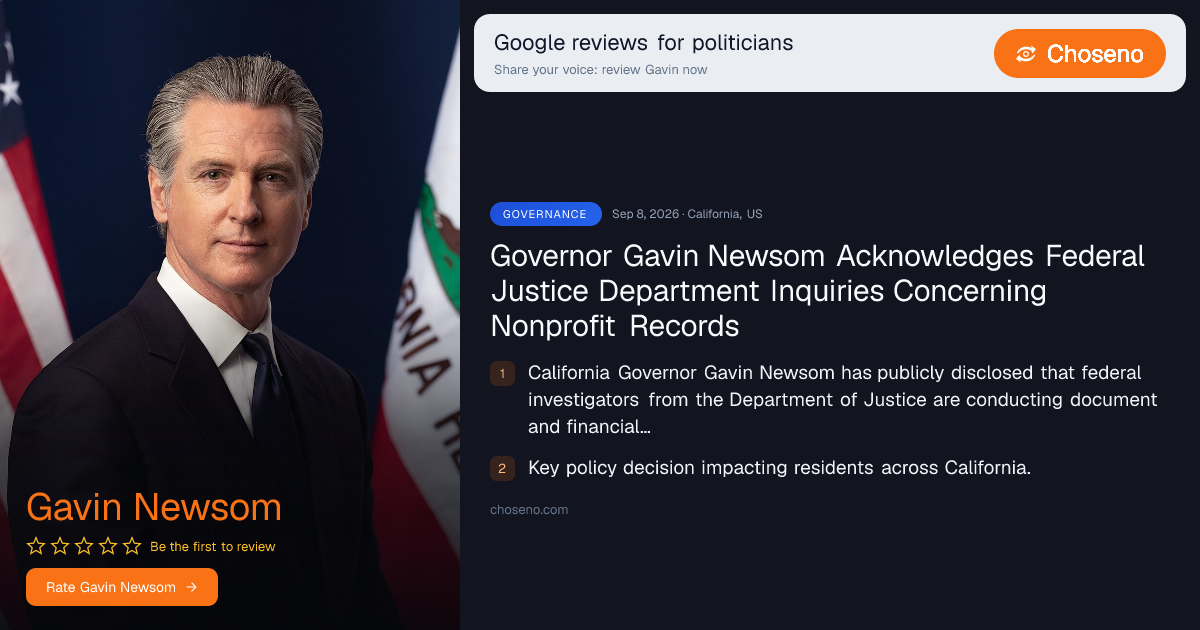
Governor Gavin Newsom Acknowledges Federal Justice Department Inquiries Concerning Nonprofit Records
California Governor Gavin Newsom has publicly disclosed that federal investigators from the Department of Justice are conducting document and financial inquiries involving him and First Partner Jennifer Siebel Newsom, prompting a fierce dispute over federal oversight impartiality and nonprofit compliance.
Read full article
Governance
US Sep 8, 2026
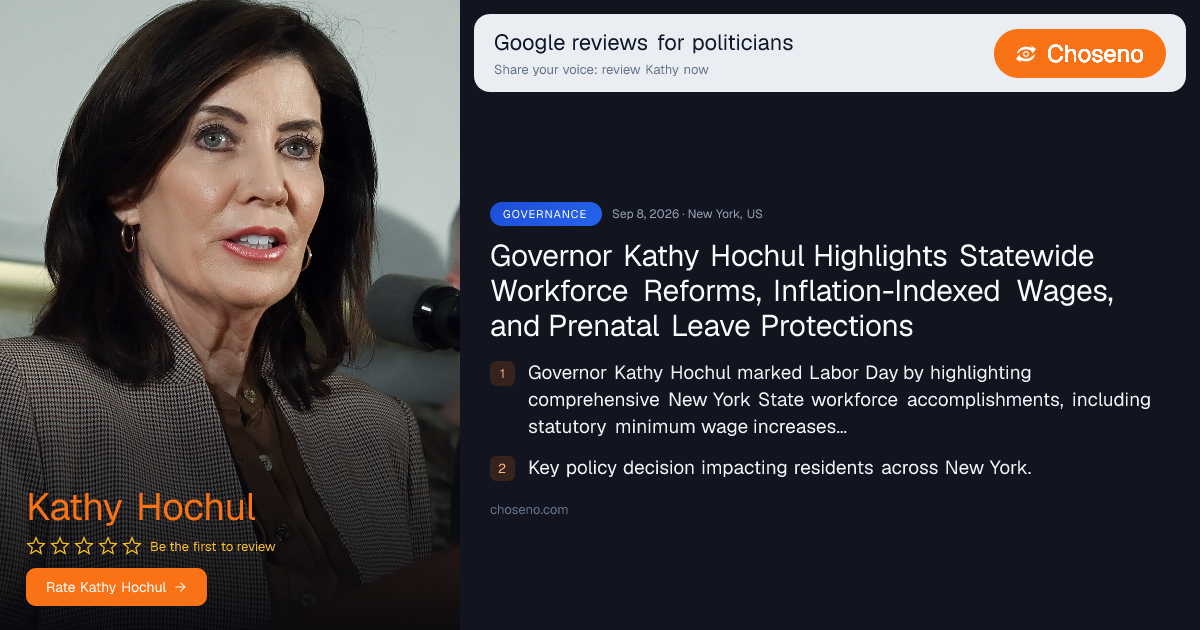
Governor Kathy Hochul Highlights Statewide Workforce Reforms, Inflation-Indexed Wages, and Prenatal Leave Protections
Governor Kathy Hochul marked Labor Day by highlighting comprehensive New York State workforce accomplishments, including statutory minimum wage increases indexed to inflation, implementation of the nation first mandatory paid prenatal leave law, and the full elimination of the state unemployment insurance debt.
Read full article
Governance
US Sep 7, 2026
New Jersey Governor Mikie Sherrill Reaches Agreement With 17 Public Sector Unions Waiving Health Premium Hikes
New Jersey Governor Mikie Sherrill and 17 state employee labor unions have finalized an agreement waiving scheduled 2027 health benefit contribution rate increases and creating an advisory working group to overhaul the State Health Benefits Program.
Read full article