Pritzker Enacts Nearly 400 Bills with Single Clerical Veto, Sparking Debate on Illinois Executive Oversight
Illinois Governor JB Pritzker approved virtually every bill passed by the Democratic-controlled General Assembly this legislative session, issuing only a single technical budget reduction veto and highlighting ideological alignment between executive and legislative branches.
Choseno Civic News Desk September 4, 2026 3 min read Illinois, US
What do you think of the people in this story? Rate them anonymously — tap a face below.
SPRINGFIELD, Ill. — As the statutory bill-signing window concluded in Springfield, a review of the 104th Illinois General Assembly reveals that Governor JB Pritzker approved nearly 400 legislative measures passed by lawmakers, issuing zero substantive policy vetoes and just a single technical reduction veto to correct a drafting typo in the state budget.
The legislative record underscores an extraordinary degree of policy cohesion between the executive branch and the Democratic supermajorities controlling both the Illinois House and Senate. More than 90 percent of the measures advanced to the governor's desk were sponsored by legislative Democrats, covering wide-ranging statutory changes in state taxation, public education, healthcare regulation, and criminal justice.
The lone veto exercised by Pritzker was an item-reduction veto addressing a clerical drafting error in the fiscal year appropriations bill, where a typographical mistake had inadvertently earmarked more than $500 billion rather than $250,000 for a community branch of the NAACP in Chicago. Outside of that arithmetic correction, every substantive policy enactment sent to the executive mansion became law.
Under the Illinois Constitution, the governor possesses expansive veto powers compared to many other state executives. In addition to a total veto, the governor can issue amendatory vetoes recommending specific statutory revisions, as well as line-item and reduction vetoes on appropriations bills.
Fiscal watchdogs and Republican legislative leaders have criticized the governor’s near-total acquiescence to legislative proposals, contending that executive restraint has failed to curb escalating state expenditures or protect taxpayers from fiscal expansion. Critics pointed to measures such as legislation raising base lawmaker salaries to $101,450—the fourth-highest legislative compensation in the nation—as well as expanding state regulatory mandates without independent executive scrutiny.
In contrast to Illinois, Democratic governors in other states with one-party legislative control have demonstrated a more assertive veto posture. In California, Governor Gavin Newsom routinely vetoes between 10 and 15 percent of bills sent to his desk by fellow Democrats, frequently citing unbudgeted operational costs or overlapping administrative burdens. Similarly, New Mexico Governor Michelle Lujan Grisham rejected nearly 18 percent of legislative measures during her state's recent session. Among the 16 states operating under Democratic trifectas, Pritzker has issued the fifth-fewest vetoes.
The Pritzker administration and Democratic legislative leaders reject assertions of rubber-stamping, maintaining that the absence of contentious vetoes reflects intensive, pre-legislative collaboration between the governor's policy staff and committee chairs. Administration officials argue that potential policy disagreements, fiscal feasibility concerns, and regulatory mechanics are rigorously negotiated and reconciled prior to floor votes, preventing flawed legislation from advancing to final passage.
Among the major statutory packages enacted by Pritzker this session were measures eliminating the state's 1 percent grocery sales tax, establishing permanent state child tax credits for lower-income working families, expanding healthcare insurance oversight, and advancing clean energy manufacturing incentives across northern and central Illinois.
With Illinois entering the general election cycle and state budget forecasters projecting tightening revenue collections for the upcoming fiscal cycle, the balance of power between Springfield's legislative leadership and the governor's office will remain a focal point of civic scrutiny as lawmakers prepare for the autumn veto session.
Rate the people mentioned in this article


Related Coverage in State Government
See all State Government newsState Government
US Sep 4, 2026
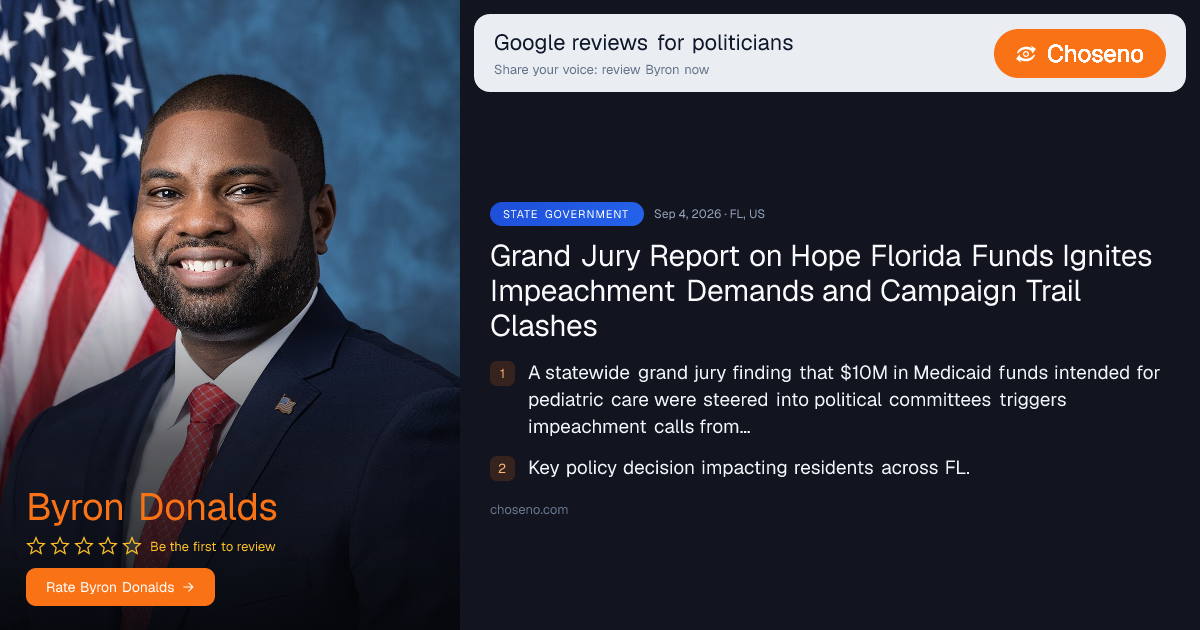
Grand Jury Report on Hope Florida Funds Ignites Impeachment Demands and Campaign Trail Clashes
A statewide grand jury finding that $10M in Medicaid funds intended for pediatric care were steered into political committees triggers impeachment calls from House Democrats against Attorney General James Uthmeier.
Read full article
State Government
US Aug 28, 2026
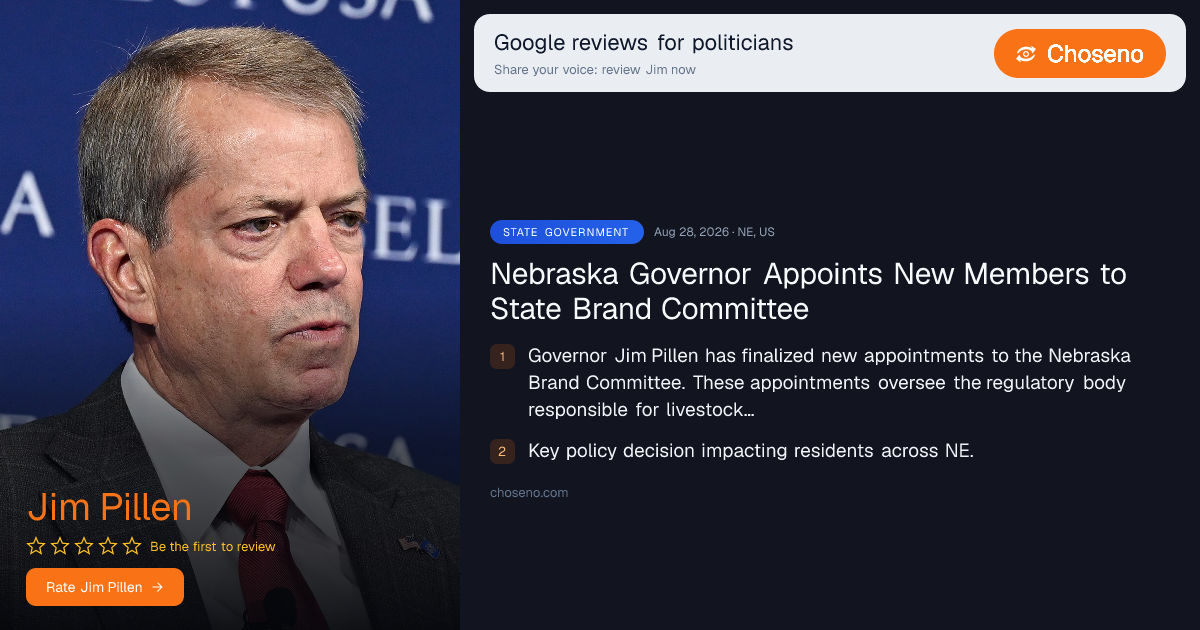
Nebraska Governor Appoints New Members to State Brand Committee
Governor Jim Pillen has finalized new appointments to the Nebraska Brand Committee. These appointments oversee the regulatory body responsible for livestock brand registration and inspection across the state.
Read full article
State Government
US Aug 28, 2026
Missouri Governor Appoints DNR Director to Oversee State Budget and Procurement
Governor Mike Parson has selected the current head of the Department of Natural Resources to lead the Office of Administration. This transition shifts the leadership of the agency responsible for managing the state's fiscal operations and purchasing contracts.
Read full article