Maine Governor Janet Mills Denounces U.S.-Canada Trade Dispute as 'Irrational', Urging Swift De-Escalation
In an extended interview with CBC News, Maine Governor Janet Mills warned that cross-border tariff disputes are inflicting acute economic damage on Maine's forestry, seafood, and highway maintenance sectors, calling on national leaders to halt bilateral trade hostilities.
Choseno New England & Border Policy Bureau September 4, 2026 2 min read ME, US
What do you think of the people in this story? Rate them anonymously — tap a face below.
AUGUSTA, Maine — Maine Governor Janet Mills issued a forceful appeal for cross-border economic sanity, characterizing the escalating trade war between the United States and Canada as fundamentally irrational and warning that retaliatory tariffs are harming regional industries and working families on both sides of the international boundary.
Speaking in an extended broadcast interview with CBC News, Governor Mills emphasized the unique, interconnected reality of Maine's economy with neighboring Canadian provinces, particularly New Brunswick and Quebec. Drawing upon shared cultural heritage, interwoven family lineages, and deeply integrated regional supply chains, Mills stated that Maine residents across the political spectrum are united in demanding an immediate de-escalation of protectionist trade measures initiated in Washington.
Governor Mills detailed the compounding financial strain that tariffs on softwood lumber and forest products have placed on Maine's rural economy. Decades of specialized cross-border logistics mean Maine sawmills, commercial woodlot owners, and paper manufacturing facilities rely on frictionless daily transfers of raw logs and processed wood chips across the border. Tariffs have inflated input costs for regional homebuilders while compressing operating margins for independent timber truckers in Aroostook, Somerset, and Washington counties.
The governor also voiced deep concern over reciprocal trade measures targeting American coastal exports. With Canadian retaliatory schedules contemplating steep levies on American seafood, Maine's iconic lobster, crab, and scallop harvesting fleets face severe market disruptions at maritime processors in the Maritimes. Furthermore, Mills highlighted critical municipal safety risks, pointing out that New England state transportation agencies and municipal public works departments rely heavily on bulk deliveries of Canadian-mined road de-icing salt to maintain interstate highways and rural school bus routes through harsh northeastern winters.
Governor Mills confirmed that she has communicated directly with regional Canadian provincial premiers and urged Congressional delegations in Washington to champion bilateral trade exemptions. Mills reiterated that treating Canada—America's closest geopolitical ally and trading partner—as an adversarial economic combatant undermines collective North American manufacturing resilience and border security.
Cross-border trade associations and chambers of commerce in Bangor and Saint John praised Mills's outspoken intervention, expressing hope that sub-national gubernatorial leadership will pressure federal trade negotiators to restore tariff-free commerce under the USMCA framework ahead of the winter shipping season.
Rate the people mentioned in this article

Related Coverage in Economy
See all Economy newsEconomy
US Sep 8, 2026
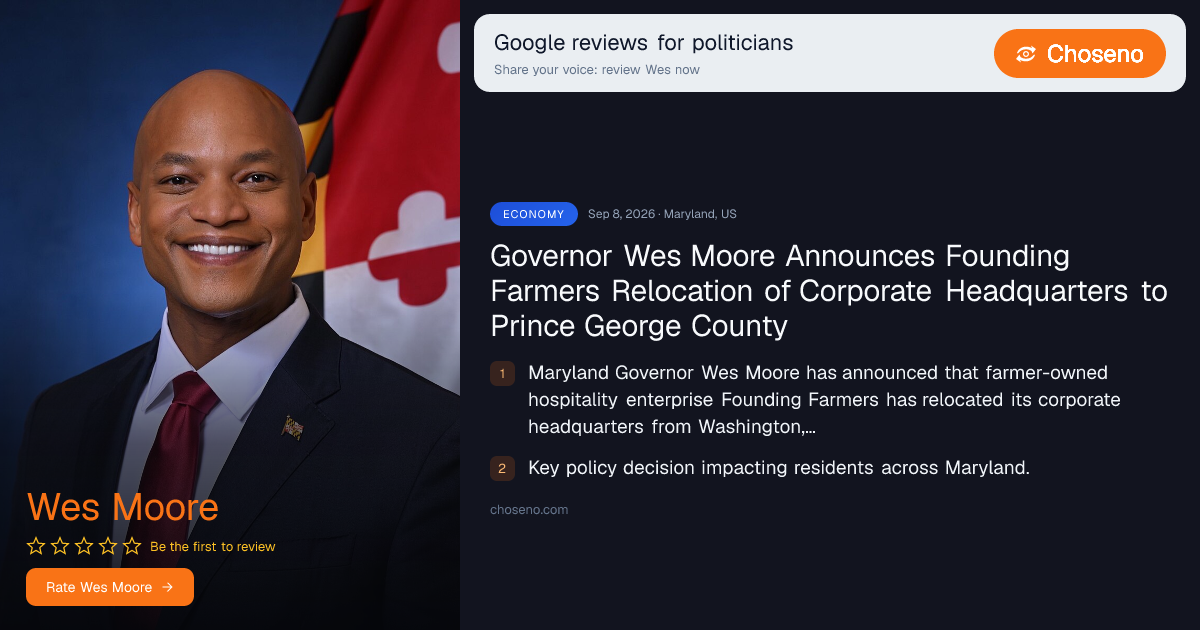
Governor Wes Moore Announces Founding Farmers Relocation of Corporate Headquarters to Prince George County
Maryland Governor Wes Moore has announced that farmer-owned hospitality enterprise Founding Farmers has relocated its corporate headquarters from Washington, D.C. to District Heights in Prince George County, establishing an operational hub supported by state and county economic development loans that will generate over ninety full-time positions.
Read full article
Economy
CA Sep 3, 2026
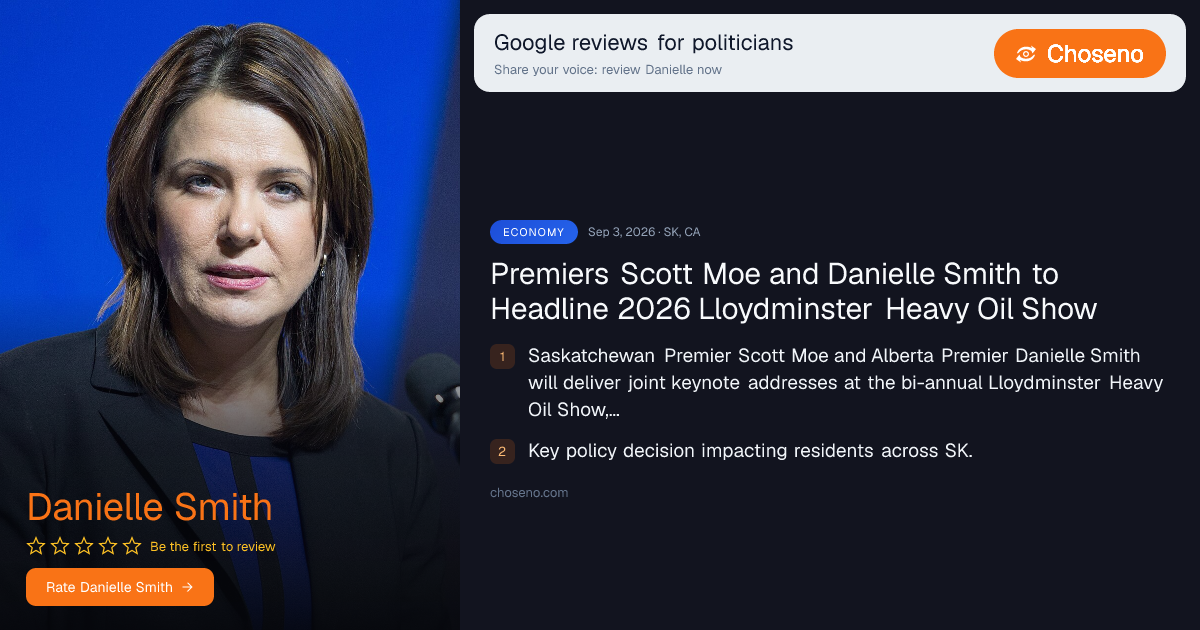
Premiers Scott Moe and Danielle Smith to Headline 2026 Lloydminster Heavy Oil Show
Saskatchewan Premier Scott Moe and Alberta Premier Danielle Smith will deliver joint keynote addresses at the bi-annual Lloydminster Heavy Oil Show, championing interprovincial energy integration, carbon capture investments, and Western Canadian resource sovereignty.
Read full article
Economy
CA Sep 3, 2026
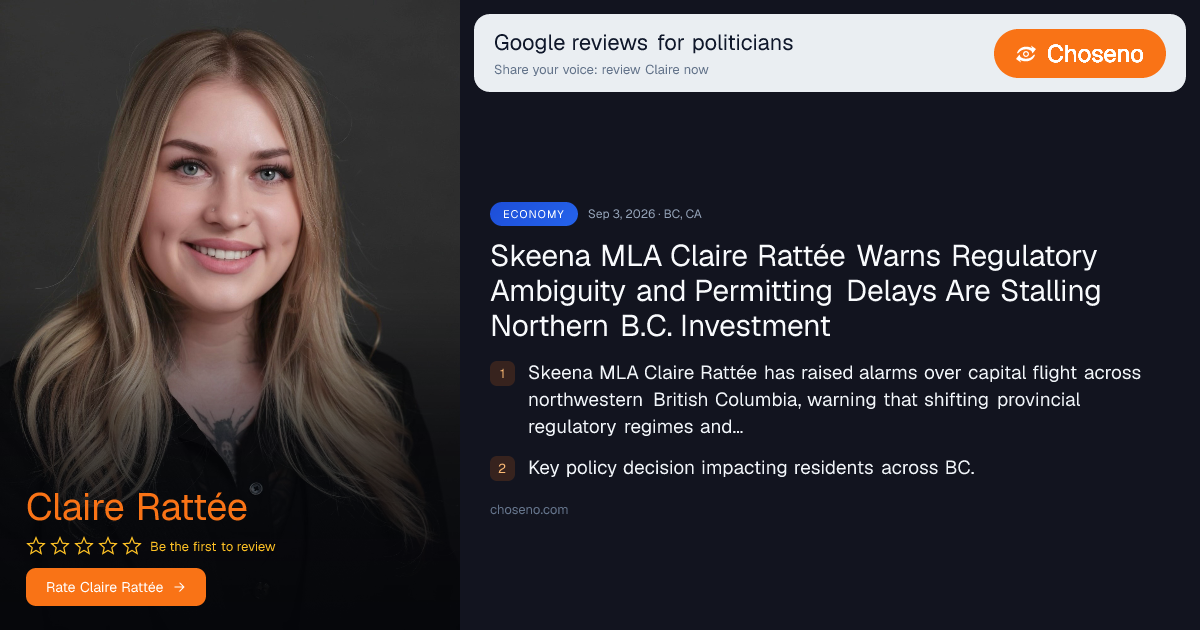
Skeena MLA Claire Rattée Warns Regulatory Ambiguity and Permitting Delays Are Stalling Northern B.C. Investment
Skeena MLA Claire Rattée has raised alarms over capital flight across northwestern British Columbia, warning that shifting provincial regulatory regimes and multi-year environmental permitting delays are undermining critical mineral, forestry, and energy development from Terrace to Kitimat.
Read full article