Manitoba Premier Kinew Advances Northern Energy Corridor and Port of Churchill Expansion
Manitoba Premier Wab Kinew is championing the 'Churchill Plus' infrastructure corridor, signaling openness to interprovincial pipeline and energy transport proposals through Hudson Bay. The initiative pairs Arctic deepwater port expansion with a landmark Crown-Indigenous profit-sharing framework.
Choseno Civic News Desk August 31, 2026 2 min read MB, CA
What do you think of the people in this story? Rate them anonymously — tap a face below.
Winnipeg, MB — Manitoba Premier Wab Kinew is advancing an ambitious interprovincial infrastructure strategy titled Churchill Plus, signaling the provincial government's readiness to support major energy transmission, critical mineral pipelines, and transport corridors connecting Western Canadian resources to international markets through the Port of Churchill on Hudson Bay.
The strategic initiative represents a significant development in Western Canadian energy diplomacy. Amid heightened international demand for Canadian natural resources and evolving North American trade relationships, Premier Kinew has expressed openness to interprovincial pipeline proposals—including the multi-jurisdictional Northern Shield Energy Corridor concepts discussed alongside Alberta and Ontario leadership. The framework seeks to establish an Arctic deepwater export gateway that shortens shipping routes to European and transatlantic markets.
A central pillar of Premier Kinew’s approach is the proposed establishment of a Manitoba Crown-Indigenous Corporation to govern northern corridor development. Under the provincial blueprint, First Nations and Red River Métis governments would hold majority equity partnerships, with up to 80 percent of corporate revenues distributed directly to Indigenous communities. The administration maintains that securing free, prior, and informed consent alongside substantial economic ownership is essential to replacing historical resource extraction models with genuine economic reconciliation.
To accelerate project viability, the provincial and federal governments recently finalized technical feasibility assessments confirming that modern ice-class commercial vessels can maintain year-round shipping operations through the Hudson Bay maritime corridor. Furthermore, Premier Kinew and Prime Minister Mark Carney established a bilateral one project, one review regulatory coordination pact aimed at eliminating duplicate environmental review timelines while upholding rigorous ecological safeguards.
The sweeping corridor vision has generated active dialogue across northern communities and environmental policy organizations. While business associations and regional economic development leaders praise the initiative as a transformative catalyst for northern railway modernization, mining expansion, and job creation, several Northern Manitoba First Nations leaders have called for deeper, government-to-government consultations before specific corridor alignments and marine dredging plans are finalized.
Energy economists emphasize that developing a northern multi-commodity export corridor provides Western Canada with vital trade diversification, reducing structural dependence on southern pipeline routes. As discussions continue between provincial governments, federal ministers, and Indigenous leadership, Premier Kinew’s advocacy is positioning Manitoba as a pivotal bridge connecting Western Canadian resources with global energy and industrial markets.
Rate the people mentioned in this article


Related Coverage in Economy
See all Economy newsEconomy
US Sep 8, 2026
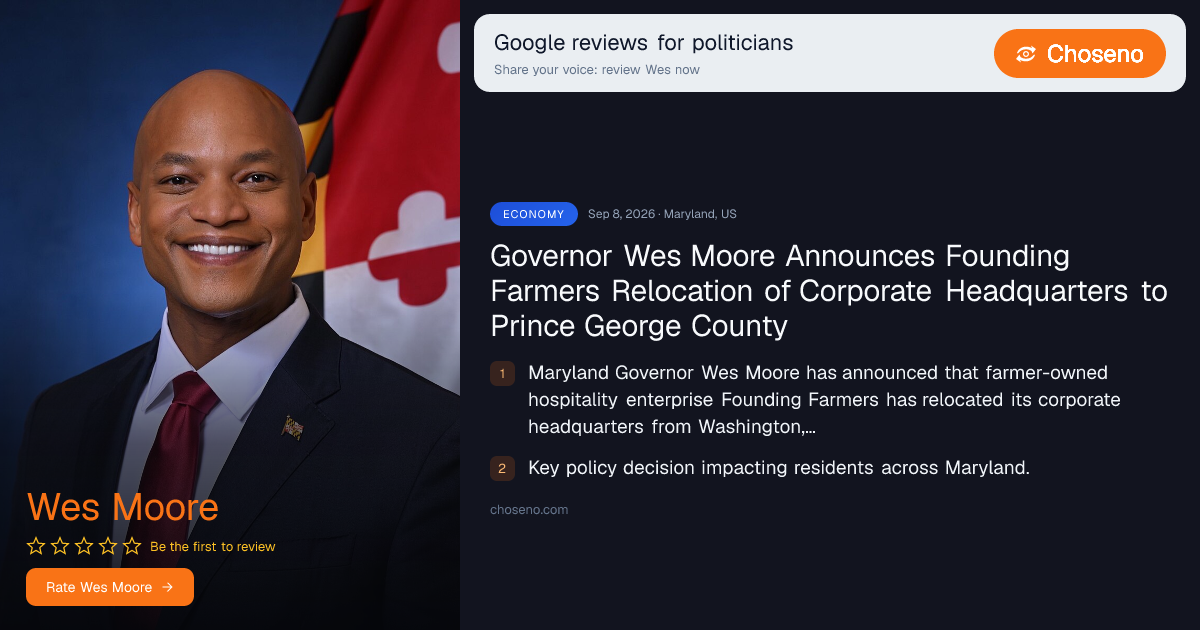
Governor Wes Moore Announces Founding Farmers Relocation of Corporate Headquarters to Prince George County
Maryland Governor Wes Moore has announced that farmer-owned hospitality enterprise Founding Farmers has relocated its corporate headquarters from Washington, D.C. to District Heights in Prince George County, establishing an operational hub supported by state and county economic development loans that will generate over ninety full-time positions.
Read full article
Economy
CA Sep 3, 2026
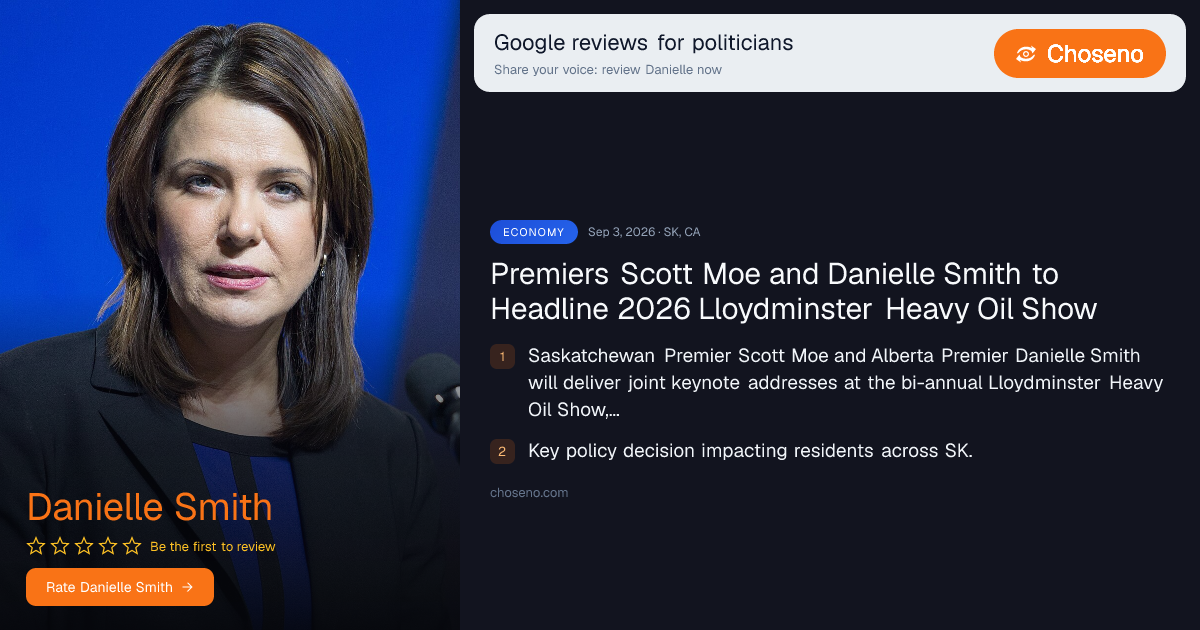
Premiers Scott Moe and Danielle Smith to Headline 2026 Lloydminster Heavy Oil Show
Saskatchewan Premier Scott Moe and Alberta Premier Danielle Smith will deliver joint keynote addresses at the bi-annual Lloydminster Heavy Oil Show, championing interprovincial energy integration, carbon capture investments, and Western Canadian resource sovereignty.
Read full article
Economy
CA Sep 3, 2026
Skeena MLA Claire Rattée Warns Regulatory Ambiguity and Permitting Delays Are Stalling Northern B.C. Investment
Skeena MLA Claire Rattée has raised alarms over capital flight across northwestern British Columbia, warning that shifting provincial regulatory regimes and multi-year environmental permitting delays are undermining critical mineral, forestry, and energy development from Terrace to Kitimat.
Read full article