Premiers Doug Ford and Danielle Smith Champion All-Canadian Energy Corridor to Sarnia Refineries
Ontario Premier Doug Ford and Alberta Premier Danielle Smith are actively championing the proposed 3,300-kilometer Northern Shield Energy Corridor pipeline. The interprovincial infrastructure initiative seeks to transport up to 800,000 barrels of Western Canadian crude per day directly to Ontario refining hubs, reinforcing domestic energy sovereignty amid cross-border trade tensions.
Choseno Civic News Desk September 2, 2026 2 min read ON, CA
What do you think of the people in this story? Rate them anonymously — tap a face below.
Toronto, ON — Highlighting a major interprovincial economic initiative to strengthen domestic energy security and shield Canadian manufacturing from cross-border supply disruptions, Ontario Premier Doug Ford published an extensive policy commentary advocating for the construction of the proposed Northern Shield Energy Corridor, according to EnergyNow.
The proposed 3,300-kilometre heavy infrastructure pipeline, jointly backed by Premier Ford and Alberta Premier Danielle Smith, is designed to transport between 500,000 and 800,000 barrels of crude oil per day from Hardisty, Alberta, directly to major refining complexes in Sarnia, Ontario. The all-Canadian corridor is structured to provide strategic infrastructure redundancy to the existing cross-border Line 5 transit system while reducing Eastern Canadian industrial reliance on foreign maritime oil imports.
Premier Ford emphasized that interprovincial energy integration represents a foundational nation-building priority in an era of heightened global supply chain volatility and international trade frictions. An $11 million joint provincial engineering and commercial viability assessment is currently underway, with technical findings expected before year-end.
Premier Danielle Smith echoed the economic rationale, noting that direct pipeline connectivity between Western Canadian energy producers and Central Canadian industrial refineries ensures that domestic resource wealth is refined and value-added within Canada, supporting tens of thousands of skilled union construction and petrochemical manufacturing jobs.
However, the mega-project faces substantial regulatory, environmental, and fiscal scrutiny. Environmental advocacy groups and energy transition researchers argue that committing tens of billions in public and private capital to new fossil fuel pipeline infrastructure conflicts with federal net-zero greenhouse gas emission mandates. Furthermore, Indigenous First Nations leaders across Northern Ontario and Manitoba have emphasized that any interprovincial right-of-way development requires comprehensive prior consultation, environmental assessments, and equity ownership partnerships.
Energy analysts in Calgary and Toronto note that while private capital financing models remain under evaluation, Premier Ford has signaled that provincial governments could consider direct equity co-investments to de-risk construction if the final feasibility study demonstrates long-term economic viability.
As federal regulators in Ottawa and provincial energy ministries review the corridor’s preliminary routing, the initiative highlights how interprovincial cooperation is emerging as a cornerstone of Canadian resource and economic strategy.
Rate the people mentioned in this article


Related Coverage in Economy
See all Economy newsEconomy
US Sep 8, 2026
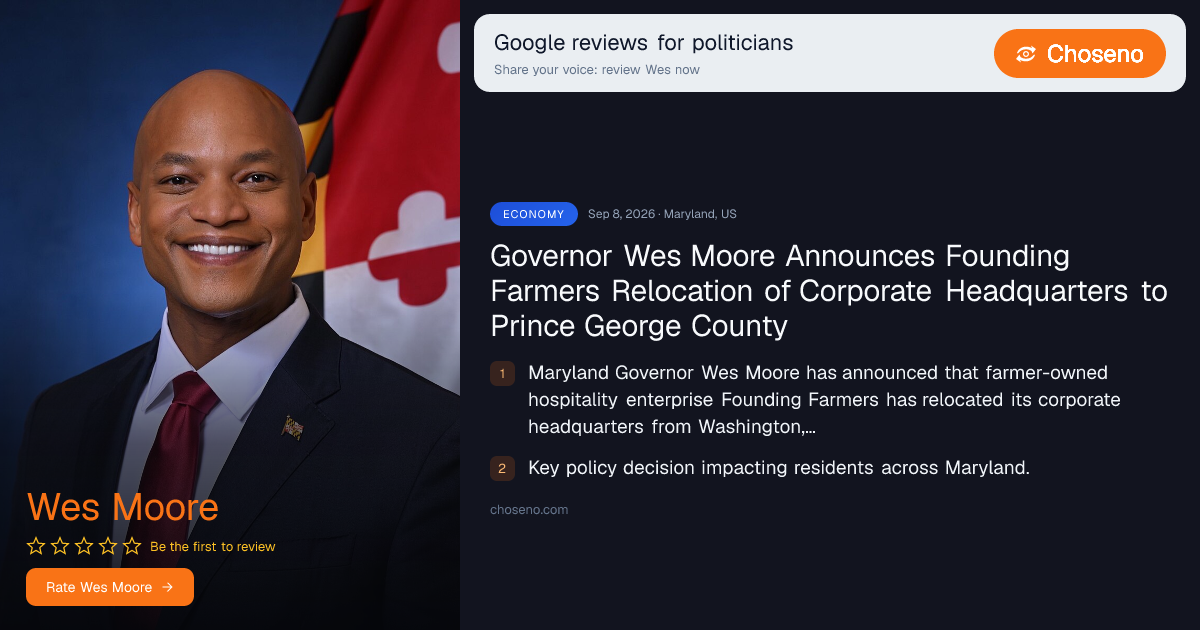
Governor Wes Moore Announces Founding Farmers Relocation of Corporate Headquarters to Prince George County
Maryland Governor Wes Moore has announced that farmer-owned hospitality enterprise Founding Farmers has relocated its corporate headquarters from Washington, D.C. to District Heights in Prince George County, establishing an operational hub supported by state and county economic development loans that will generate over ninety full-time positions.
Read full article
Economy
CA Sep 3, 2026
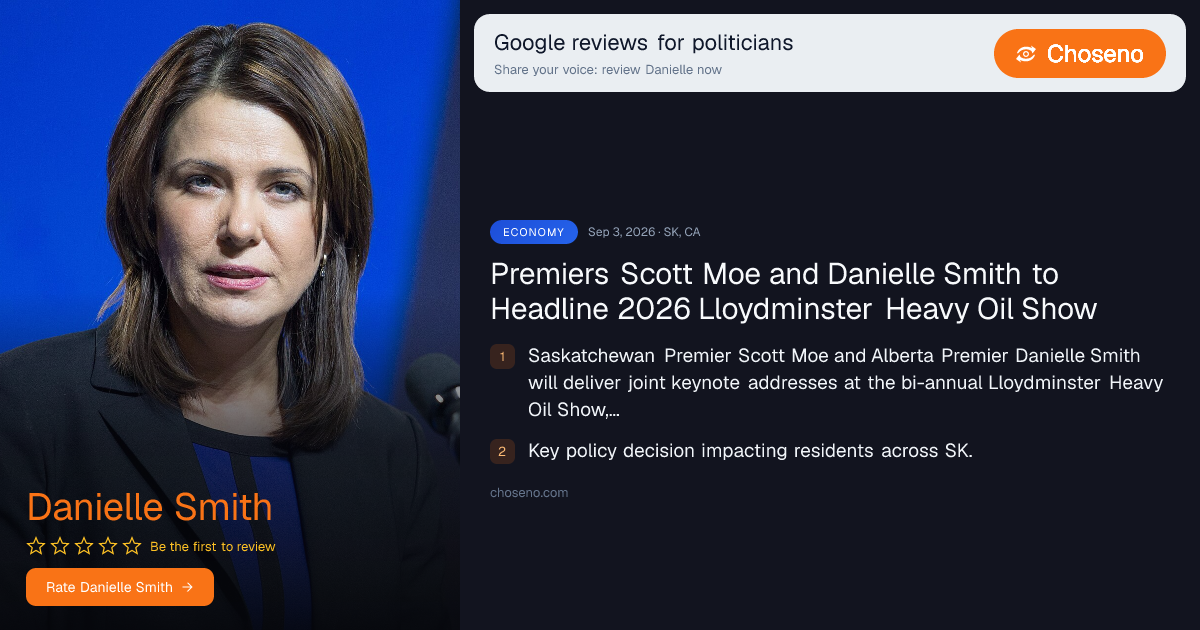
Premiers Scott Moe and Danielle Smith to Headline 2026 Lloydminster Heavy Oil Show
Saskatchewan Premier Scott Moe and Alberta Premier Danielle Smith will deliver joint keynote addresses at the bi-annual Lloydminster Heavy Oil Show, championing interprovincial energy integration, carbon capture investments, and Western Canadian resource sovereignty.
Read full article
Economy
CA Sep 3, 2026
Skeena MLA Claire Rattée Warns Regulatory Ambiguity and Permitting Delays Are Stalling Northern B.C. Investment
Skeena MLA Claire Rattée has raised alarms over capital flight across northwestern British Columbia, warning that shifting provincial regulatory regimes and multi-year environmental permitting delays are undermining critical mineral, forestry, and energy development from Terrace to Kitimat.
Read full article