Oregon Gubernatorial Candidates Kotek and Drazan Present Contrasting Economic Platforms in Rematch Forum
Oregon Governor Tina Kotek and Republican challenger Christine Drazan outlined starkly different economic blueprints regarding commercial regulations, tax structures, and industrial competitiveness at a Portland business forum.
Choseno Civic News Desk September 25, 2026 3 min read Oregon, US
What do you think of the people in this story? Rate them anonymously — tap a face below.
Incumbent Democratic Governor Tina Kotek and Republican nominee Christine Drazan presented contrasting visions for Oregon economic future during a high-stakes gubernatorial candidate forum hosted by business organizations in Portland, debating regulatory compliance costs, corporate tax burdens, and municipal affordability in the first statewide executive rematch in nearly half a century. Addressing regional corporate executives, manufacturing leaders, and small business operators, both candidates sought to define the economic terms of the November general election as independent polling indicates an exceptionally tight contest across suburban enclaves in Clackamas, Washington, and Marion counties.
Governor Kotek defended her administration economic stewardship, maintaining that sustained long-term growth requires predictable regulatory frameworks, targeted state investments into housing construction, and modern industrial infrastructure. Highlighting recommendations formulated by her executive economic competitiveness council, the governor pointed to recent administrative reforms that streamlined commercial building permits, expanded semiconductor manufacturing workforce training partnerships, and accelerated public capital investments into regional transportation corridors. Governor Kotek argued that responsible state governance must balance private sector enterprise with worker protections and environmental stewardship, asserting that dismantling statutory climate benchmarks would compromise quality of life and fail to resolve structural affordability pressures.
Challenger Christine Drazan mounted an aggressive critique of the administration record, asserting that four years of executive mismanagement have elevated consumer living costs, driven corporate relocations to neighboring states, and suppressed private investment across Oregon interior counties. Unveiling details of her comprehensive economic proposal, Drazan pledged to implement an immediate moratorium on new state administrative regulations, reduce bureaucratic compliance overhead for small enterprises, and repeal the state Corporate Activity Tax, which she characterized as a compounding hidden levy passed directly onto household grocery and utility bills. The challenger emphasized that rising unemployment in rural timber communities and escalating commercial vacancies in downtown Portland demonstrate the urgent necessity of conservative executive leadership.
Regional business federations and chamber of commerce representatives closely evaluated both candidates proposals regarding energy infrastructure and emerging technology developments. Commercial developers pointed out that Oregon competitive advantage as a national clean computing corridor faces growing regulatory strain, noting that debates surrounding municipal water consumption and electric grid capacity for data centers require coherent state standards. Business leaders emphasized that whichever candidate assumes office must deliver predictable corporate tax structures and tangible municipal public safety improvements to revitalize metropolitan commercial centers.
Political science researchers at Portland State University observed that the gubernatorial contest reflects deepening ideological polarization between progressive urban districts and conservative rural regions. Analysts noted that while Governor Kotek retains strong support among public sector labor unions and urban voters in Multnomah County, economic anxiety over persistent housing inflation and local property tax assessments provides Drazan with significant opportunities to mobilize suburban swing voters who previously supported moderate candidates.
Both candidates concluded the forum by framing the upcoming election as a decisive referendum on Oregon trajectory. Governor Kotek pledged to continue expanding housing availability, defending public education funding, and building resilient economic infrastructure, while Drazan promised to restore fiscal discipline, curtail state regulatory growth, and champion working-class families across every region of Oregon.
Rate the people mentioned in this article


Related Coverage in General
See all General newsGeneral
US Sep 25, 2026
Georgia Gubernatorial Nominees Clash Over Agricultural Relief and Farm Production Safeguards
Candidates seeking to succeed term-limited Governor Brian Kemp outlined comprehensive agricultural blueprints targeting escalating input costs, diesel taxation relief, water allocations, and family farm preservation.
Read full article

General
US Sep 25, 2026
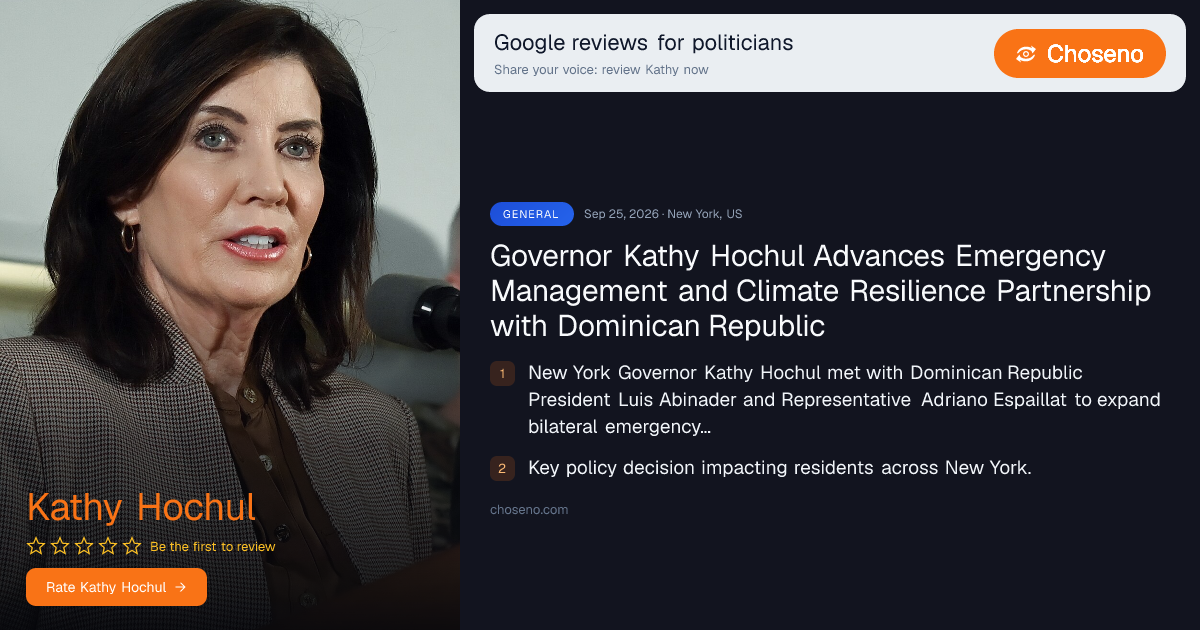
Governor Kathy Hochul Advances Emergency Management and Climate Resilience Partnership with Dominican Republic
New York Governor Kathy Hochul met with Dominican Republic President Luis Abinader and Representative Adriano Espaillat to expand bilateral emergency management cooperation, training exchanges, and environmental resilience.
Read full article
General
US Sep 25, 2026
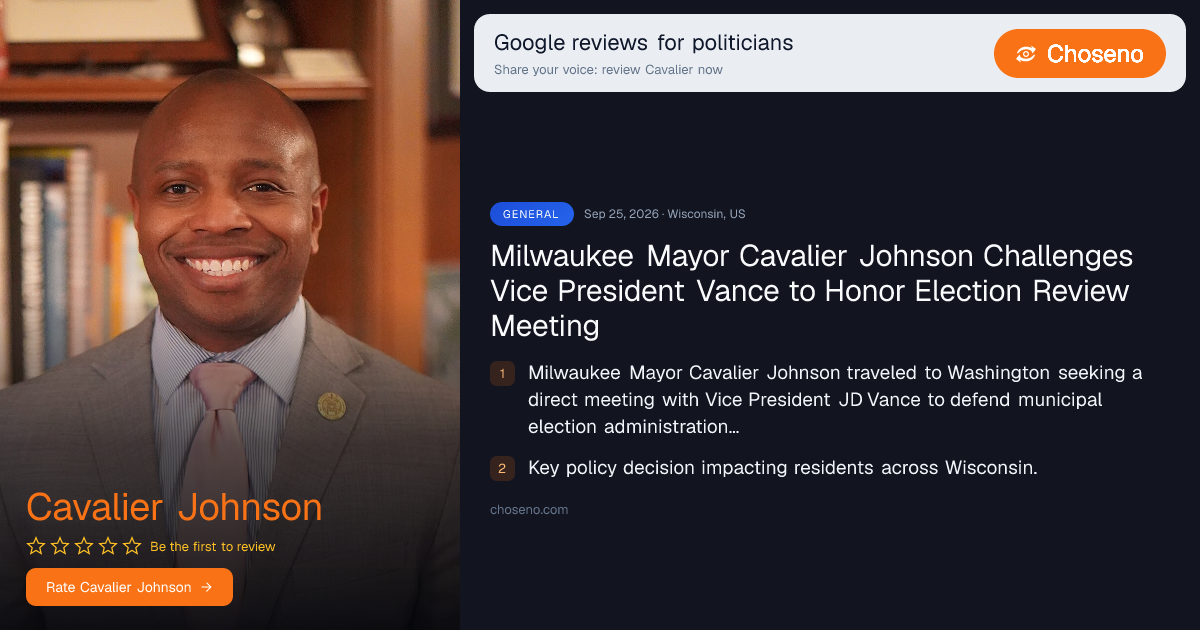
Milwaukee Mayor Cavalier Johnson Challenges Vice President Vance to Honor Election Review Meeting
Milwaukee Mayor Cavalier Johnson traveled to Washington seeking a direct meeting with Vice President JD Vance to defend municipal election administration following federal scrutiny over Wisconsin voting procedures.
Read full article