Prime Minister Mark Carney Convenes Fall Cabinet Planning Forum in Banff to Accelerate Infrastructure and Trade Strategy
Prime Minister Mark Carney is gathering federal cabinet ministers in Banff, Alberta, for a two-day strategic planning forum dedicated to expediting national infrastructure, addressing North American trade pressures, and advancing legislative priorities ahead of Parliament resuming.
Choseno Civic News Desk September 7, 2026 3 min read Alberta, CA
What do you think of the people in this story? Rate them anonymously — tap a face below.
Prime Minister Mark Carney has convened federal cabinet ministers for a high-level strategic planning forum in Banff, Alberta, designed to align government priorities around accelerated economic development, clean energy deployment, and long-term national resilience ahead of the fall parliamentary sitting. The two-day retreat, scheduled from September 10 to September 11, brings together senior department heads, economic advisors, and parliamentary strategists to establish a unified operational framework for the upcoming legislative calendar. Government planners highlighted that the Banff gathering serves as a critical juncture for federal ministers to coordinate cross-portfolio initiatives aimed at boosting Canadian industrial productivity and navigating shifting macroeconomic conditions.
Federal officials familiar with the forum agenda indicated that the primary objective centers on removing regulatory bottlenecks and shortening delivery timelines for major nation-building capital projects. With heightened economic competition across North America and shifting international trade dynamics, the Carney ministry is placing particular emphasis on expediting public works, interprovincial energy transmission networks, and transportation corridors. Senior administration planners noted that the federal government intends to streamline environmental review mechanisms and harmonize interprovincial regulatory standards to ensure that high-impact capital investments in clean technology and manufacturing can break ground without prolonged administrative delays.
Deputy Prime Minister and Minister of Finance Chrystia Freeland is scheduled to present an updated macroeconomic assessment during the retreat, detailing federal fiscal benchmarks, ongoing measures to curb household inflation, and targeted capital support programs for domestic industrial supply chains. Senior ministry staff emphasized that ministers must demonstrate tangible execution plans within their respective departmental portfolios, particularly regarding supply chain diversification, municipal infrastructure transfers, and commercial innovation grants. Freeland is also expected to outline fiscal boundaries designed to safeguard federal balance sheet integrity while prioritizing strategic public investments.
The planning forum also arrives as the federal administration prepares a multi-faceted response to external tariff uncertainties and ongoing trade negotiations with the United States. Discussion working groups during the two-day gathering are structured to analyze cross-border regulatory harmonization, resource corridor development, and coordinated engagement strategies with provincial and territorial leaders across Western and Atlantic Canada. Policy analysts noted that the Carney administration is seeking to project economic stability and policy predictability for institutional investors weighing large-scale capital deployments across Canada.
Intergovernmental coordination is expected to remain a prominent theme throughout the Banff sessions. Carney and his cabinet leadership team have sought to reset collaborative ties with provincial premiers, emphasizing shared economic interests in natural resource extraction, critical minerals processing, and housing construction targets. Forum organizers noted that establishing clear intergovernmental partnerships will be vital to unlocking regional economic growth, reducing interprovincial trade barriers, and aligning federal funding streams with local workforce development and housing supply needs.
In addition to economic development and trade resilience, cabinet members will review forthcoming legislative packages covering digital governance, consumer affordability protections, and national security investments. Government house strategists plan to use the concluding working sessions to map parliamentary committee schedules and refine debate priorities, ensuring the administration enters the autumn session with a disciplined focus on delivering economic results and passing critical budget implementation legislation. Cabinet ministers are expected to conclude the retreat by finalizing departmental performance metrics to track policy delivery milestones across all federal portfolios throughout the coming fiscal year.
Rate the people mentioned in this article


Related Coverage in Governance
See all Governance newsGovernance
US Sep 8, 2026
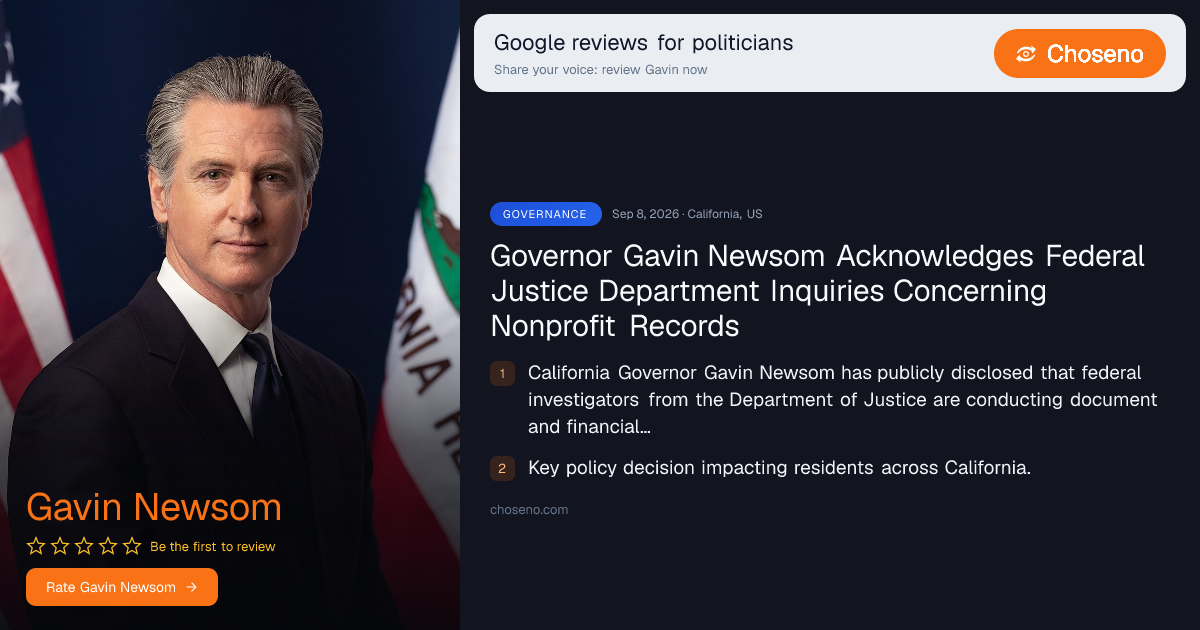
Governor Gavin Newsom Acknowledges Federal Justice Department Inquiries Concerning Nonprofit Records
California Governor Gavin Newsom has publicly disclosed that federal investigators from the Department of Justice are conducting document and financial inquiries involving him and First Partner Jennifer Siebel Newsom, prompting a fierce dispute over federal oversight impartiality and nonprofit compliance.
Read full article
Governance
US Sep 8, 2026
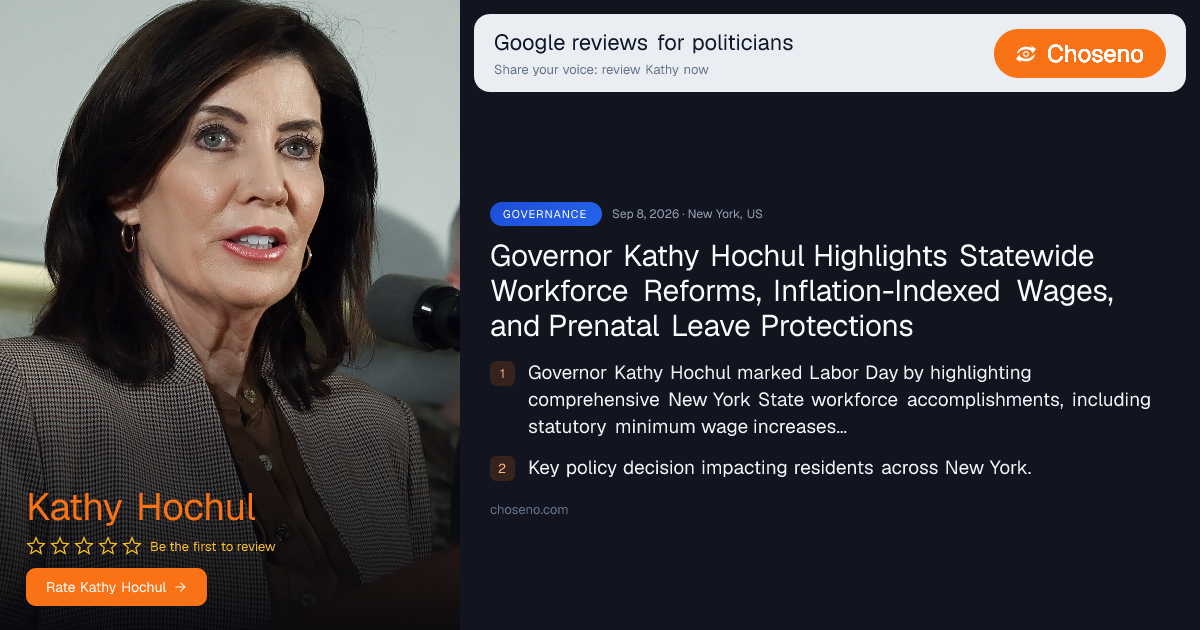
Governor Kathy Hochul Highlights Statewide Workforce Reforms, Inflation-Indexed Wages, and Prenatal Leave Protections
Governor Kathy Hochul marked Labor Day by highlighting comprehensive New York State workforce accomplishments, including statutory minimum wage increases indexed to inflation, implementation of the nation first mandatory paid prenatal leave law, and the full elimination of the state unemployment insurance debt.
Read full article
Governance
US Sep 7, 2026
New Jersey Governor Mikie Sherrill Reaches Agreement With 17 Public Sector Unions Waiving Health Premium Hikes
New Jersey Governor Mikie Sherrill and 17 state employee labor unions have finalized an agreement waiving scheduled 2027 health benefit contribution rate increases and creating an advisory working group to overhaul the State Health Benefits Program.
Read full article