Arizona Gubernatorial Candidate Andy Biggs Calls for Statewide Prohibition on Flock Surveillance Cameras
Republican gubernatorial nominee U.S. Representative Andy Biggs pledged to enact a statewide ban on Flock automated license plate reader networks, establishing a sharp contrast with Governor Katie Hobbs over government surveillance and civil liberties.
Choseno Civic News Desk September 5, 2026 2 min read US
What do you think of the people in this story? Rate them anonymously — tap a face below.
PHOENIX — In a significant policy pronouncement shaping the 2026 Arizona gubernatorial contest, Republican nominee and U.S. Representative Andy Biggs announced he will seek a comprehensive statewide legislative ban on automated license plate reader systems operated by Flock Safety, characterizing the ubiquitous surveillance cameras as an unacceptable intrusion into Fourth Amendment privacy protections.
Speaking during an interview on KTAR News 92.3 FM’s Arizona’s Morning News, Biggs stated that the rapid proliferation of automated vehicular tracking networks across Maricopa, Pima, and surrounding counties has crossed constitutional boundaries. While acknowledging that law enforcement agencies utilize automated plate readers to track stolen automobiles and locate missing persons, Biggs argued that the centralized commercial aggregation and inter-agency sharing of daily vehicular travel records amounts to warrantless mass surveillance.
"We have reached the point where the state must pull the plug on Flock cameras," Representative Andy Biggs said in Phoenix. "The capability to track innocent citizens as they drive to church, visit the doctor, or commute to work without a search warrant is fundamentally incompatible with constitutional liberty. When technology becomes this intrusive and ‘Big Brother-ish,’ state government has an obligation to step in and protect citizen privacy."
Biggs confirmed that if elected chief executive, he would direct state transportation officials to terminate automated reader permits along state rights-of-way and work with legislative allies at the State Capitol to bar municipalities from deploying public funds for commercial license plate tracking networks.
The proposal establishes a pronounced contrast with Democratic Governor Katie Hobbs, whose administration has emphasized local municipal control and law enforcement flexibility. A spokesperson for Governor Hobbs highlighted that decisions regarding public safety technology and departmental tools are best determined by local police chiefs, sheriffs, and elected city councils who are directly accountable to their communities.
"Governor Katie Hobbs believes in supporting Arizona law enforcement with the modern resources they need to solve violent crimes, apprehend fugitives, and keep neighborhoods safe, while ensuring robust constitutional guardrails," an administration spokesperson stated in Phoenix. "Local police departments and town councils are in the best position to decide how to deploy local policing tools responsibly, and state government should not impose rigid, blanket mandates that compromise public safety operations."
The debate over Flock technology has gained considerable momentum across the Valley of the Sun following localized controversies and audits regarding data retention protocols. In Tempe, city officials recently moved to review camera placement and data-sharing agreements following civil liberties inquiries from privacy coalitions, while state lawmakers in both parties have signaled interest in establishing statutory data retention limits during the upcoming 2027 legislative session.
Campaign strategists note that Biggs’ stance reflects a growing libertarian-conservative coalition aligning with progressive privacy organizations to challenge private sector surveillance contracting in state and local government.
Rate the people mentioned in this article


Related Coverage in Electoral & Legislative
See all Electoral & Legislative newsElectoral & Legislative
US Sep 5, 2026
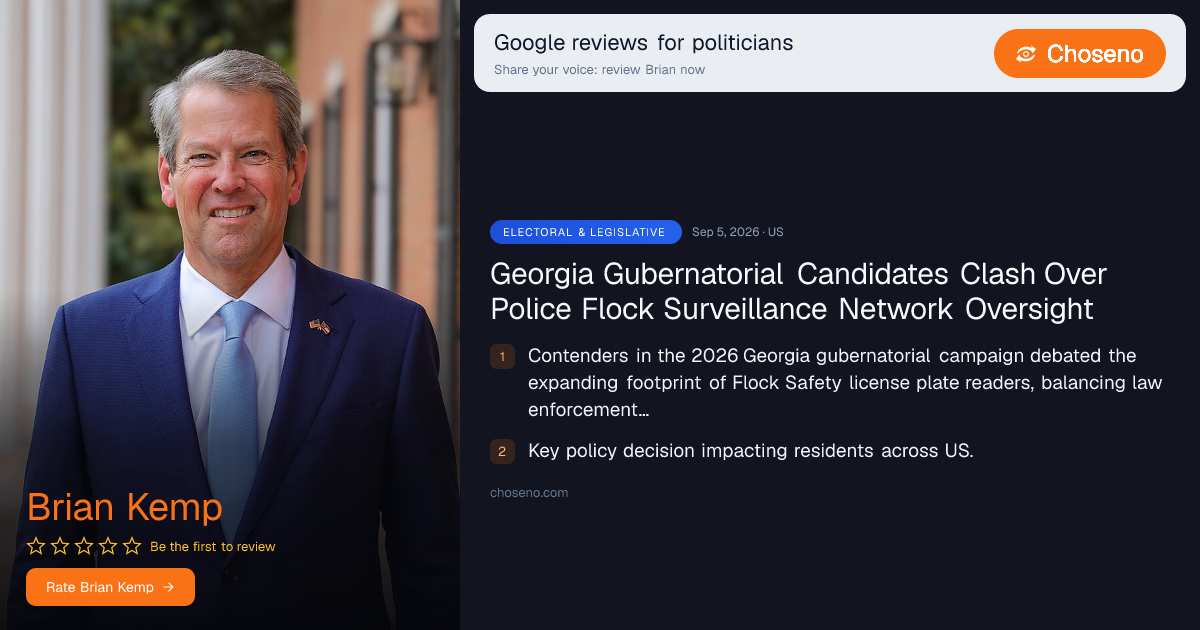
Georgia Gubernatorial Candidates Clash Over Police Flock Surveillance Network Oversight
Contenders in the 2026 Georgia gubernatorial campaign debated the expanding footprint of Flock Safety license plate readers, balancing law enforcement investigative successes against bipartisan calls for statutory privacy guardrails.
Read full article
Electoral & Legislative
US Sep 5, 2026
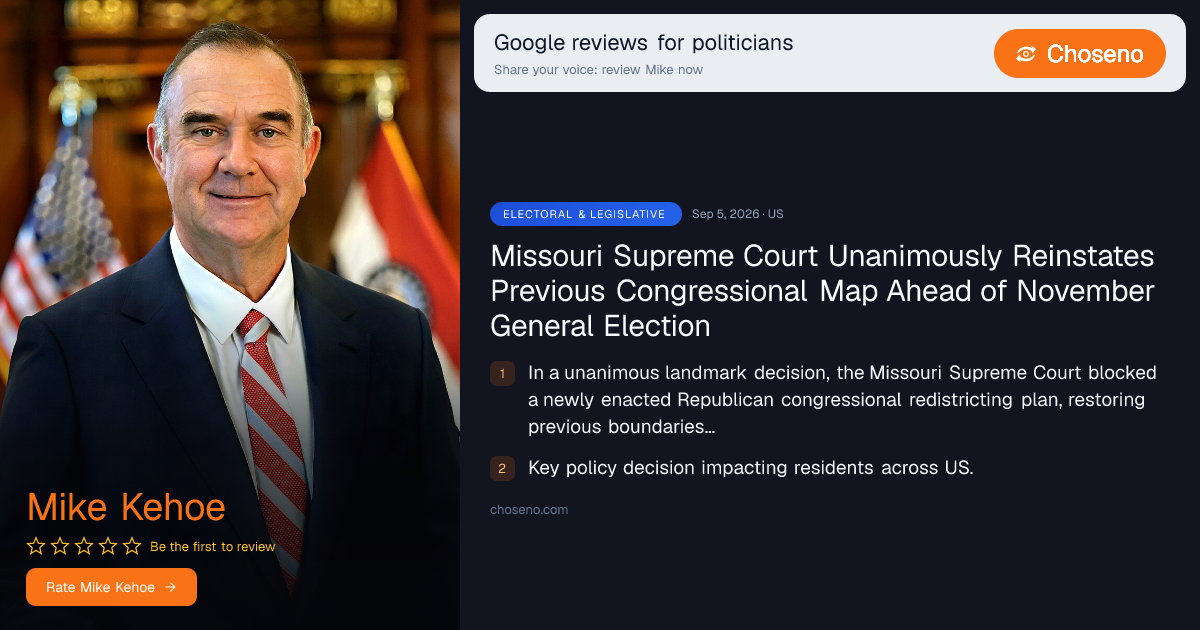
Missouri Supreme Court Unanimously Reinstates Previous Congressional Map Ahead of November General Election
In a unanimous landmark decision, the Missouri Supreme Court blocked a newly enacted Republican congressional redistricting plan, restoring previous boundaries for the November general election while placing a voter referendum on the ballot.
Read full article
Electoral & Legislative
US Sep 5, 2026
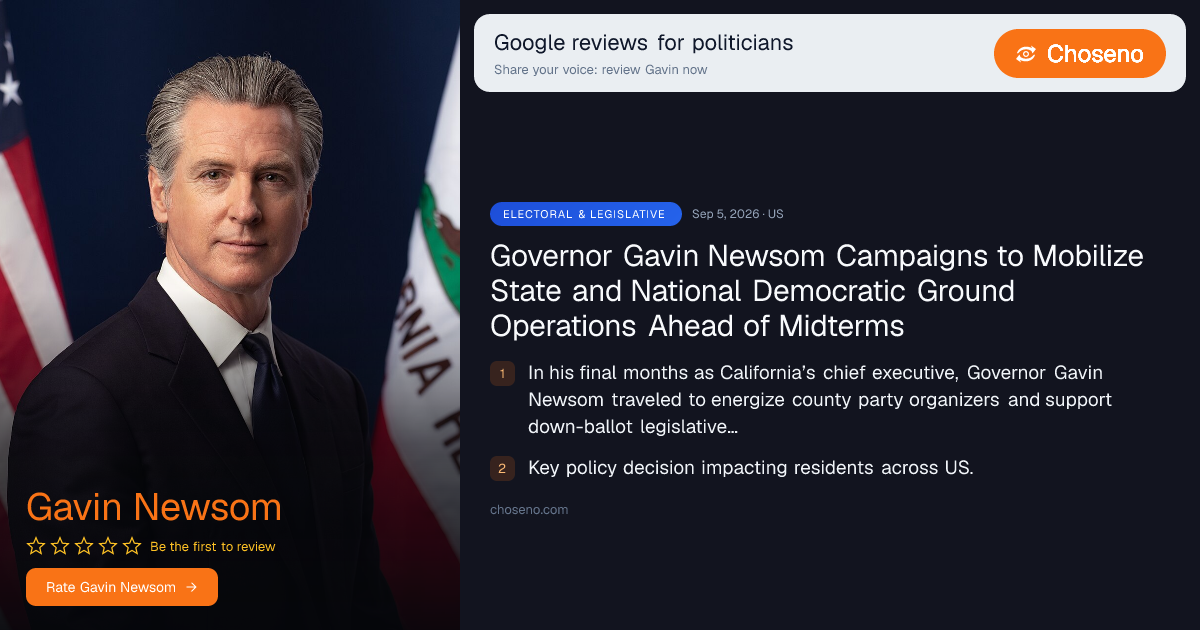
Governor Gavin Newsom Campaigns to Mobilize State and National Democratic Ground Operations Ahead of Midterms
In his final months as California’s chief executive, Governor Gavin Newsom traveled to energize county party organizers and support down-ballot legislative candidates heading into the 2026 midterm elections.
Read full article