Missouri Supreme Court Unanimously Reinstates Previous Congressional Map Ahead of November General Election
In a unanimous landmark decision, the Missouri Supreme Court blocked a newly enacted Republican congressional redistricting plan, restoring previous boundaries for the November general election while placing a voter referendum on the ballot.
Choseno Civic News Desk September 5, 2026 2 min read US
JEFFERSON CITY, Mo. — The Missouri Supreme Court issued a unanimous, high-impact ruling on congressional redistricting, blocking the state's newly drawn Republican legislative map from taking effect for the November 2026 general election and ordering that general election ballots be contested under the state's previous 2022 congressional boundaries.
The decisive decision resolves an intense constitutional clash over citizen direct democracy in Missouri. The court ruled that a grassroots referendum petition challenging the legislature's redistricting statute was legally sufficient, timely filed, and fully eligible for placement before statewide voters on the November ballot. Under the Missouri Constitution, the qualification of a certified citizen referendum automatically suspends the underlying legislative enactment until voters formally approve or reject the statute at the ballot box.
The judicial intervention creates an unprecedented logistical and political scenario for congressional nominees across the state. Candidates who qualified and ran in August primary contests under the newly enacted Republican map must now wage their general election campaigns within the restored district lines adopted following the 2020 census, shifting boundaries across Kansas City, St. Louis suburbs, and mid-Missouri agricultural counties.
The overturned map had sought to reconfigure central Missouri's electoral geography to enhance Republican prospects in battleground territory, an initiative closely aligned with national GOP efforts to maintain a narrow working majority in the U.S. House of Representatives. Voting rights advocates and non-partisan reform coalitions praised the ruling, arguing that the court correctly upheld the constitutional prerogative of citizens to petition laws to a popular vote.
State officials responded with sharp criticism. Secretary of State Denny Hoskins, who had previously declined to certify the referendum petition on jurisdictional grounds, expressed disappointment with the court's interpretation. Missouri Attorney General Catherine Hanaway announced that the state will petition the Supreme Court of the United States for an emergency stay, arguing that changing district lines between the primary and general elections violates federal statutory consistency and disrupts election administration.
Governor Mike Kehoe and state legislative leadership indicated that state election authorities will prepare dual operational contingency plans to ensure county clerks can finalize ballot print deadlines and comply with federal overseas military voting statutes.
"Our state government must ensure that every Missourian can cast their ballot with absolute clarity, confidence, and integrity," Governor Mike Kehoe said in Jefferson City. "While legal challenges continue through the appellate courts, our administration will work closely with local election authorities to guarantee that our election machinery operates smoothly and lawfully."
With ballot certification deadlines fast approaching, legal scholars observe that the nation's highest court faces intense time pressure should state attorneys seek emergency injunctive relief ahead of early voting deadlines.
Rate the people mentioned in this article

Related Coverage in Electoral & Legislative
See all Electoral & Legislative newsElectoral & Legislative
US Sep 5, 2026
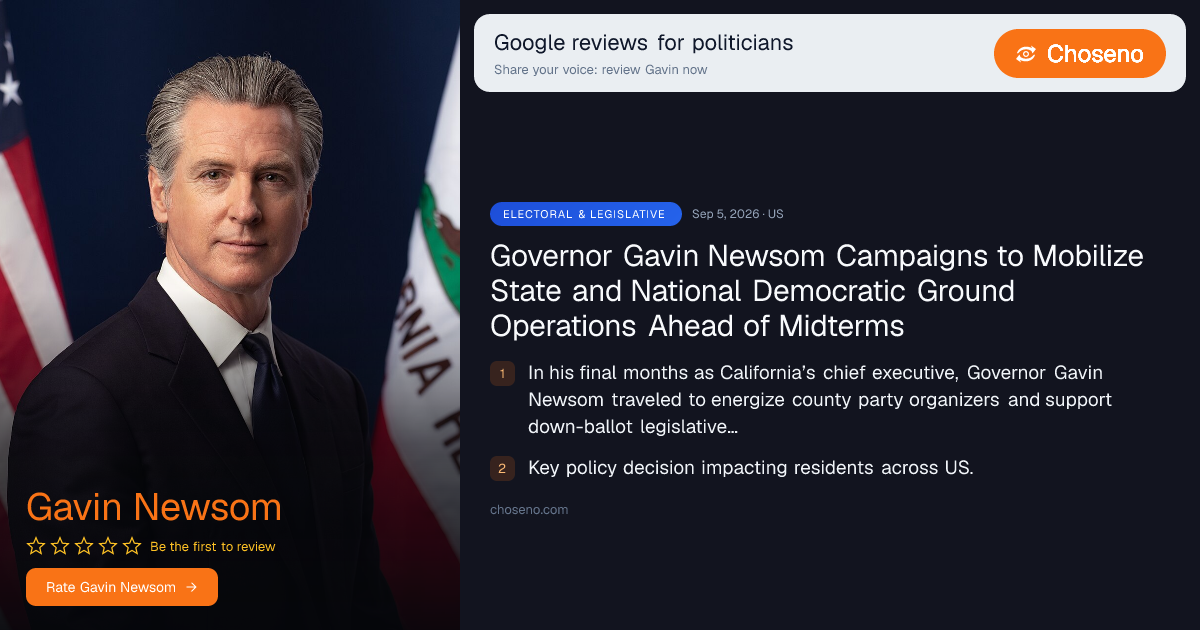
Georgia Gubernatorial Candidates Clash Over Police Flock Surveillance Network Oversight
Contenders in the 2026 Georgia gubernatorial campaign debated the expanding footprint of Flock Safety license plate readers, balancing law enforcement investigative successes against bipartisan calls for statutory privacy guardrails.
Read full article
Electoral & Legislative
US Sep 5, 2026
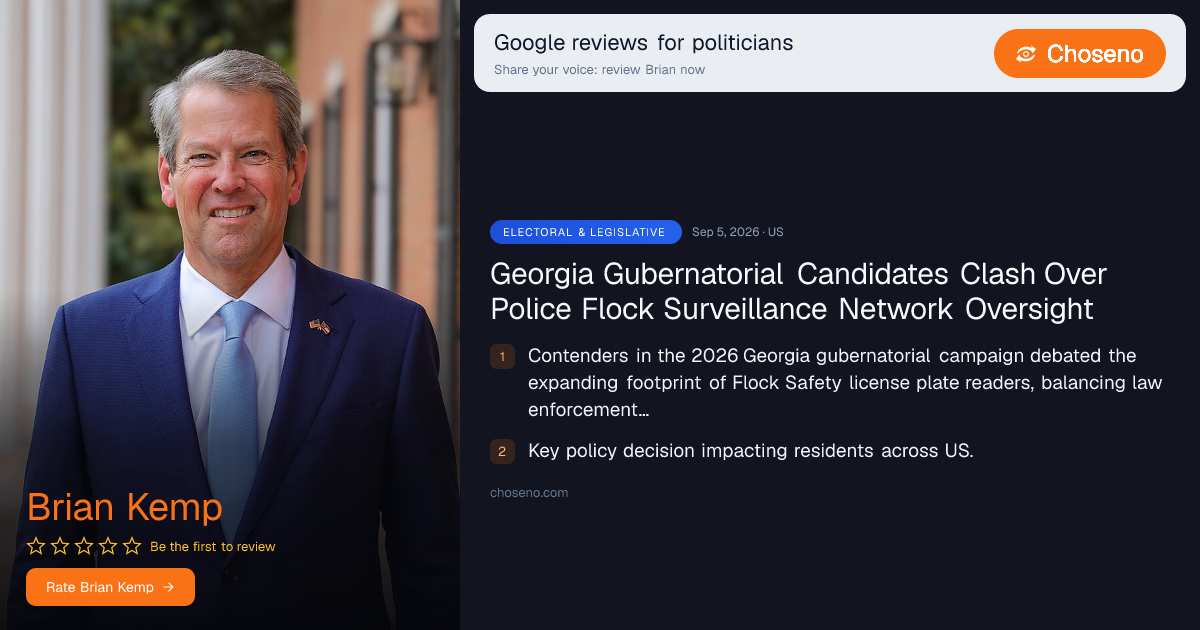
Arizona Gubernatorial Candidate Andy Biggs Calls for Statewide Prohibition on Flock Surveillance Cameras
Republican gubernatorial nominee U.S. Representative Andy Biggs pledged to enact a statewide ban on Flock automated license plate reader networks, establishing a sharp contrast with Governor Katie Hobbs over government surveillance and civil liberties.
Read full article
Electoral & Legislative
US Sep 5, 2026
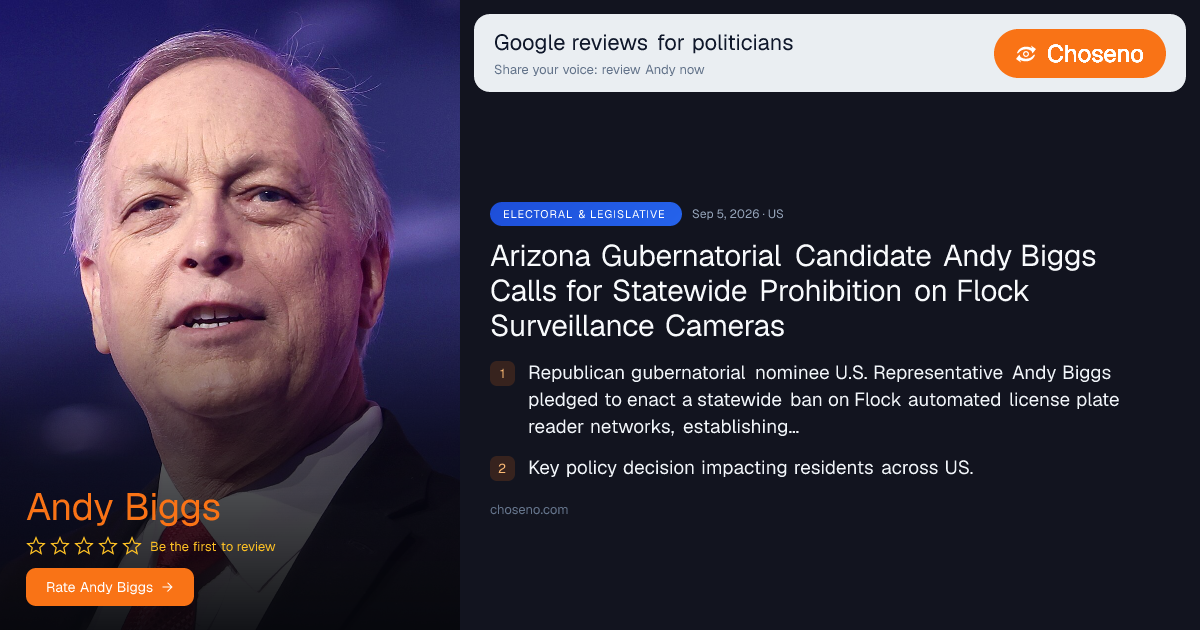
Governor Gavin Newsom Campaigns to Mobilize State and National Democratic Ground Operations Ahead of Midterms
In his final months as California’s chief executive, Governor Gavin Newsom traveled to energize county party organizers and support down-ballot legislative candidates heading into the 2026 midterm elections.
Read full article