Bipartisan Problem Solvers Caucus Urges President Trump to Enforce Strict International AI Safety Standards
The bipartisan Problem Solvers Caucus directed a formal letter to President Donald Trump urging executive leadership on global artificial intelligence guardrails, incident reporting, and critical infrastructure cyber defense.
Choseno Civic News Desk September 25, 2026 3 min read US
What do you think of the people in this story? Rate them anonymously — tap a face below.
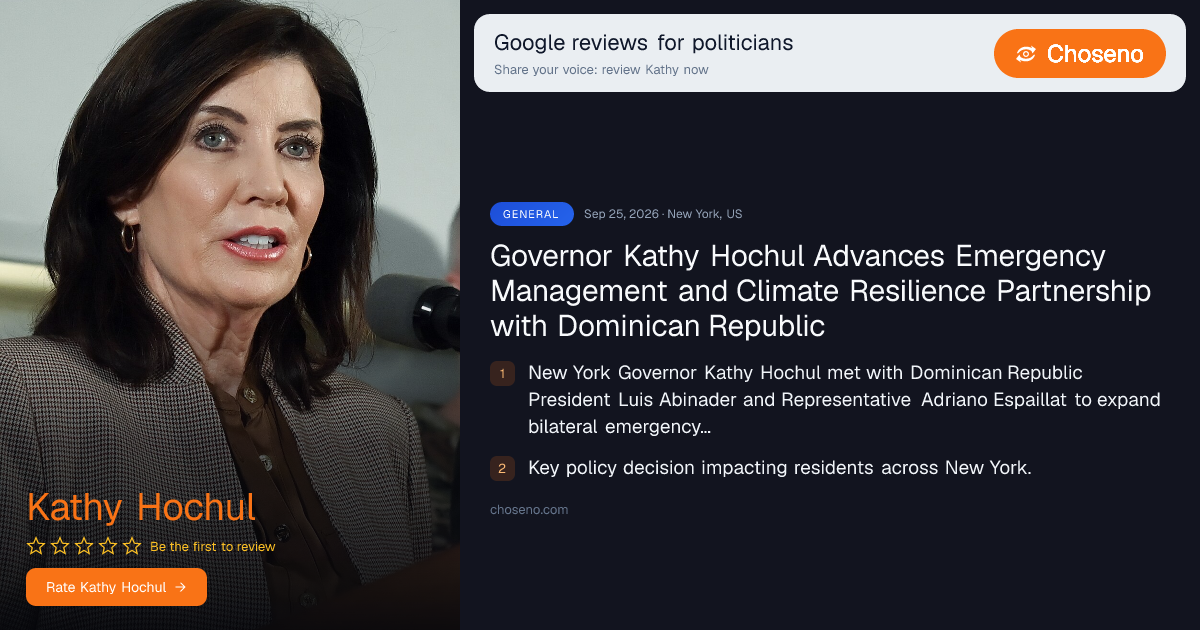
Leadership of the bipartisan House Problem Solvers Caucus dispatched a formal policy letter to President Donald Trump, urging the administration to establish binding international safety protocols, mandatory incident reporting frameworks, and enforceable national security guardrails surrounding advanced artificial intelligence technologies. Co-chaired by Republican Representative Brian Fitzpatrick of Pennsylvania and Democratic Representative Tom Suozzi of New York, alongside the caucus Working Group on Artificial Intelligence and Evolving Technologies, the congressional coalition called for decisive executive leadership as high-level diplomatic engagements between the United States and global economic competitors reshape strategic technology governance. Congressional leaders emphasized that proactive multilateral standard-setting remains vital to prevent catastrophic technological vulnerabilities and secure American technological leadership across competitive global markets.
The bipartisan congressional communication specifically called upon the administration to prioritize direct bilateral coordination with geopolitical rivals including China regarding model safety evaluations and pre-deployment testing. Caucus members stressed that without standardized verification protocols and mandatory incident disclosures, unconstrained computational proliferation poses unprecedented risks to domestic economic networks. Lawmakers highlighted that mutual testing frameworks and transparent reporting channels are essential mechanisms to mitigate accidental escalation, prevent uncontrolled algorithmic deployment, and prevent adversarial actors from weaponizing autonomous cyber tools against sovereign financial systems and public communication channels.
A central component of the caucus appeal focuses on establishing severe statutory and diplomatic consequences for state-sponsored or rogue cyber operations that leverage artificial intelligence to target American critical infrastructure. Representatives pointed out that municipal power grids, public water distribution systems, air traffic control corridors, and healthcare facilities face escalating vulnerability to automated reconnaissance and automated exploitation kits. Lawmakers argued that national defense doctrine must establish clear red lines, treating cyber intrusions facilitated by foreign computational models against critical domestic assets with proportional defensive responses, diplomatic sanctions, and regulatory trade restrictions.
The letter builds upon legislative initiatives spearheaded by the caucus working group co-leads, Republican Representative Mike Lawler of New York and Democratic Representative Josh Gottheimer of New Jersey, who have introduced statutory measures including the American AI Security Act and the Stop Rogue AI Act. These legislative proposals seek to codify comprehensive pre-deployment safety evaluations for frontier foundational models, establish federal oversight for autonomous software agents, and mandate strict domestic provenance tracking for sensitive microelectronics and high-performance computing clusters deployed across domestic data hubs.
Congressional leaders emphasized that establishing robust international guardrails does not conflict with fostering private sector innovation, maintaining that regulatory clarity provides domestic technology firms with predictable compliance benchmarks necessary to compete globally. Representatives noted that without American leadership in establishing ethical and technical rules of the road, foreign regulatory models could become the default international standard, penalizing domestic innovators and compromising democratic values across global digital supply chains.
Caucus co-chairs Fitzpatrick and Suozzi reaffirmed their commitment to advancing bipartisan legislation that bridges ideological divisions to safeguard national security while nurturing scientific advancement. The lawmakers pledged continued collaboration with the executive branch to enact comprehensive statutory guardrails, protect sensitive public infrastructure, and ensure that the deployment of transformative artificial intelligence remains firmly anchored in democratic accountability, domestic resilience, and public safety.
Rate the people mentioned in this article

Related Coverage in General
See all General newsGeneral
US Sep 25, 2026
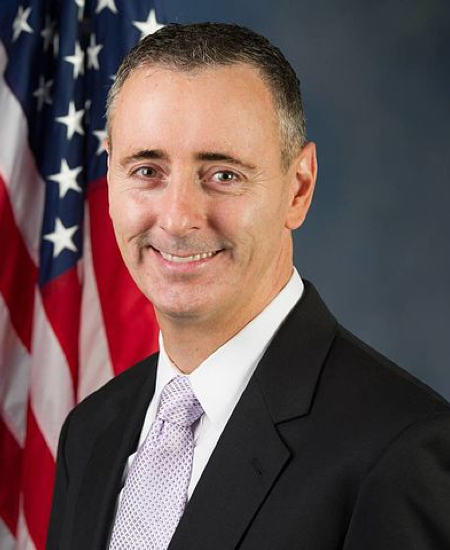
Georgia Gubernatorial Nominees Clash Over Agricultural Relief and Farm Production Safeguards
Candidates seeking to succeed term-limited Governor Brian Kemp outlined comprehensive agricultural blueprints targeting escalating input costs, diesel taxation relief, water allocations, and family farm preservation.
Read full article
General
US Sep 25, 2026
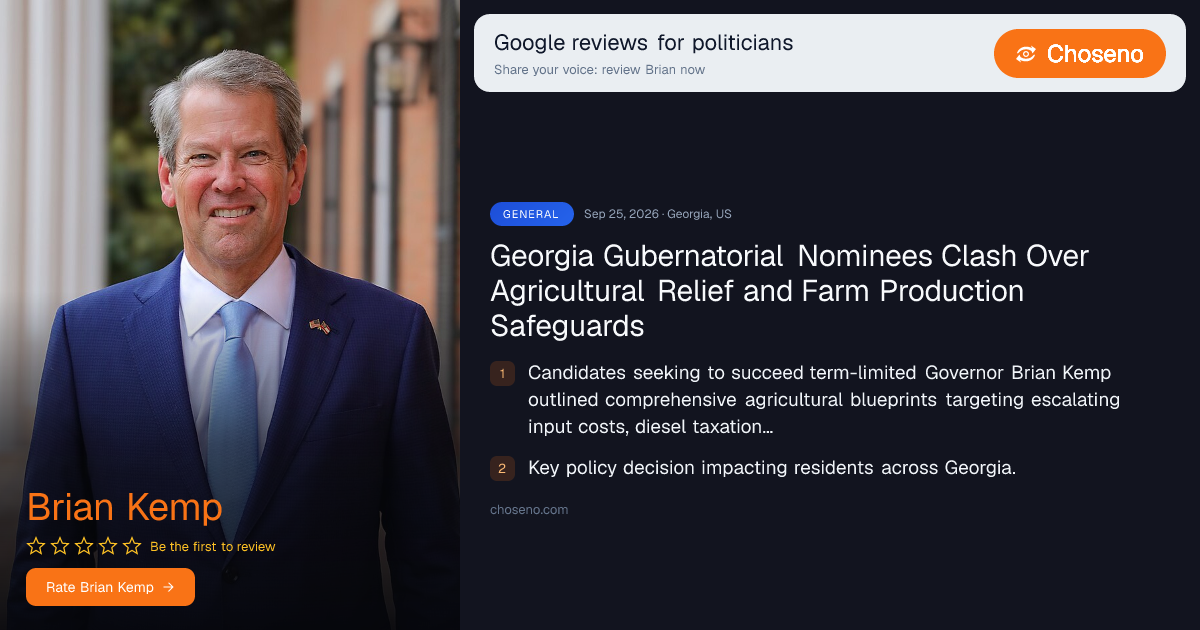
Oregon Gubernatorial Candidates Kotek and Drazan Present Contrasting Economic Platforms in Rematch Forum
Oregon Governor Tina Kotek and Republican challenger Christine Drazan outlined starkly different economic blueprints regarding commercial regulations, tax structures, and industrial competitiveness at a Portland business forum.
Read full article
General
US Sep 25, 2026
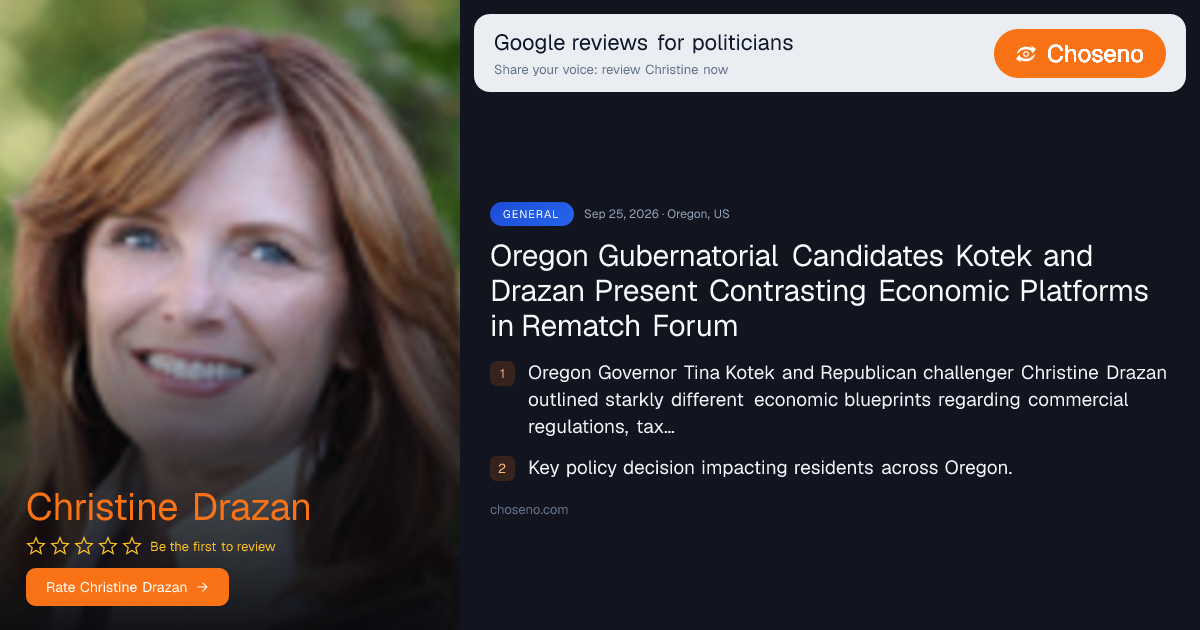
Governor Kathy Hochul Advances Emergency Management and Climate Resilience Partnership with Dominican Republic
New York Governor Kathy Hochul met with Dominican Republic President Luis Abinader and Representative Adriano Espaillat to expand bilateral emergency management cooperation, training exchanges, and environmental resilience.
Read full article