Canadian Premiers Leverage Cross-Border Energy Transmission Amid Escalating Trade Negotiations
Ontario Premier Doug Ford and provincial leaders across Canada are positioning cross-border electricity exports and critical mineral supply chains as central leverage in ongoing North American trade disputes. The strategy highlights the deep interdependence of the Great Lakes electrical grid and bilateral industrial supply networks.
Choseno Civic News Desk August 31, 2026 2 min read ON, CA
What do you think of the people in this story? Rate them anonymously — tap a face below.
Toronto, ON — In an escalating diplomatic and economic standoff over North American trade policy, Canadian provincial premiers are increasingly highlighting the strategic leverage of cross-border energy transmission and critical mineral supply chains, framing bilateral resource dependence as a central factor in upcoming trade negotiations.
The strategic posture, led prominently by Ontario Premier Doug Ford, comes in response to proposed and enacted tariff measures affecting Canadian exports to the United States. Speaking on the integration of North American markets, Premier Ford noted that Ontario Power Generation and provincial transmission networks supply essential baseload electricity to more than 1.5 million American households and heavy industrial consumers across New York, Michigan, and neighboring Great Lakes states.
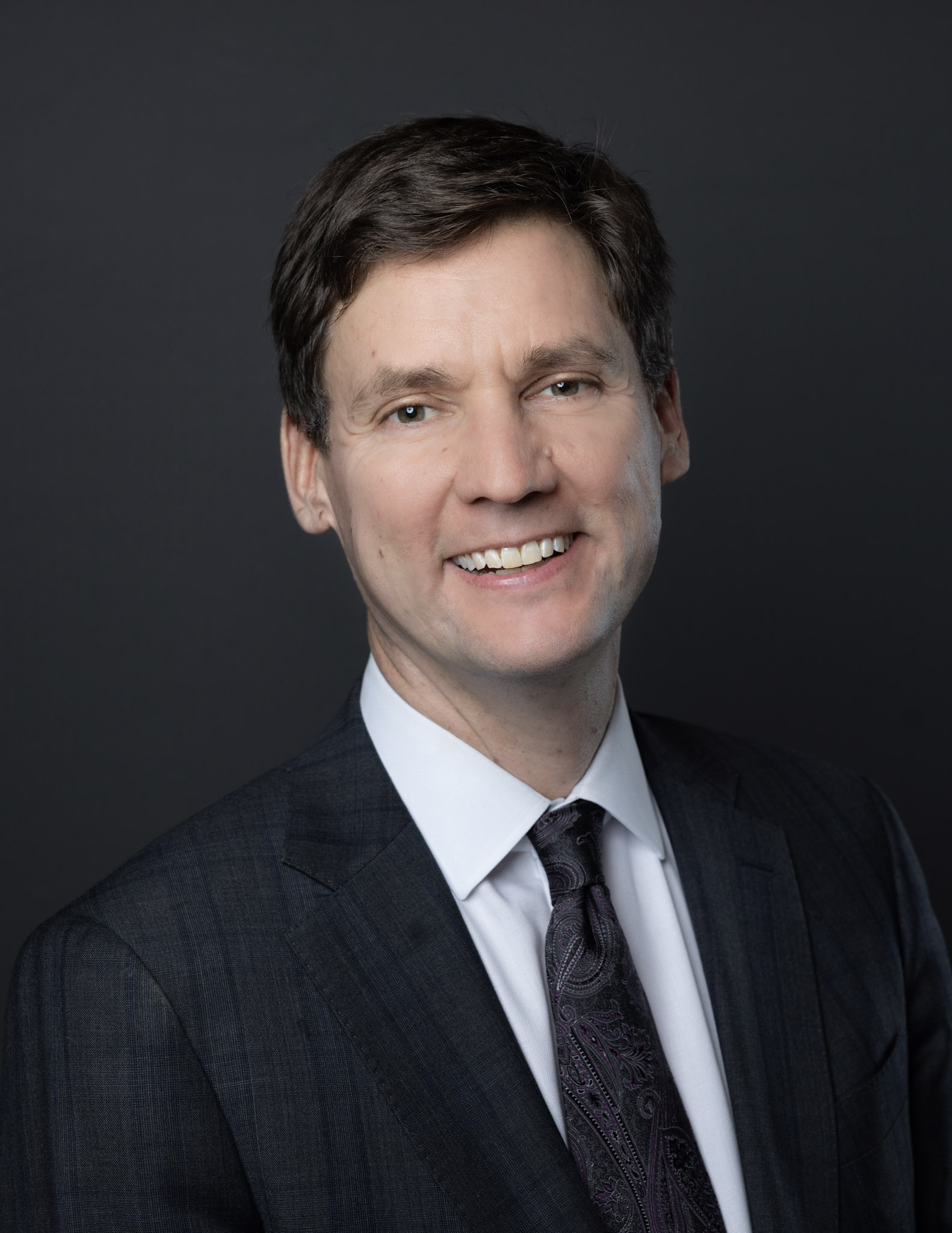
While provincial leaders have maintained that maintaining uninterrupted regional grid reliability remains the baseline priority, Ford emphasized that everything is on the table if trade barriers continue to threaten Canadian manufacturing and agricultural sectors. The premier underscored the necessity of a unified Team Canada consensus among provincial premiers—including British Columbia Premier David Eby and Quebec Premier Christine Fréchette—to coordinate interprovincial policy and ensure federal trade negotiators present a cohesive front in Washington.
In British Columbia, Premier Eby has similarly advocated for comprehensive non-tariff strategic alignment, emphasizing Canada’s dominant position as a premier supplier of clean hydro power, forestry lumber, and critical transition minerals required for North American defense and battery manufacturing. Western and central Canadian leaders point out that retaliatory tariffs on Canadian raw materials directly elevate operational costs for American manufacturers and utilities dependent on cross-border supply corridors.
Energy policy analysts and international trade economists emphasize that the North American electrical grid operates under high physical and operational interdependence, governed by bi-national reliability standards established through the North American Electric Reliability Corporation (NERC). Severe disruptions to electricity interties or cross-border fuel pipelines would impose severe financial volatility on wholesale power markets on both sides of the international border.
As interprovincial meetings continue ahead of upcoming federal trade summits, the diplomatic focus on cross-border energy underscores how subnational executive leaders are actively shaping international economic policy. Canadian premiers maintain that demonstrating the reciprocal benefits of integrated energy security is essential to de-escalating trade frictions and preserving stable commercial relations across North America.
Rate the people mentioned in this article


Related Coverage in Economy
See all Economy newsEconomy
US Sep 8, 2026
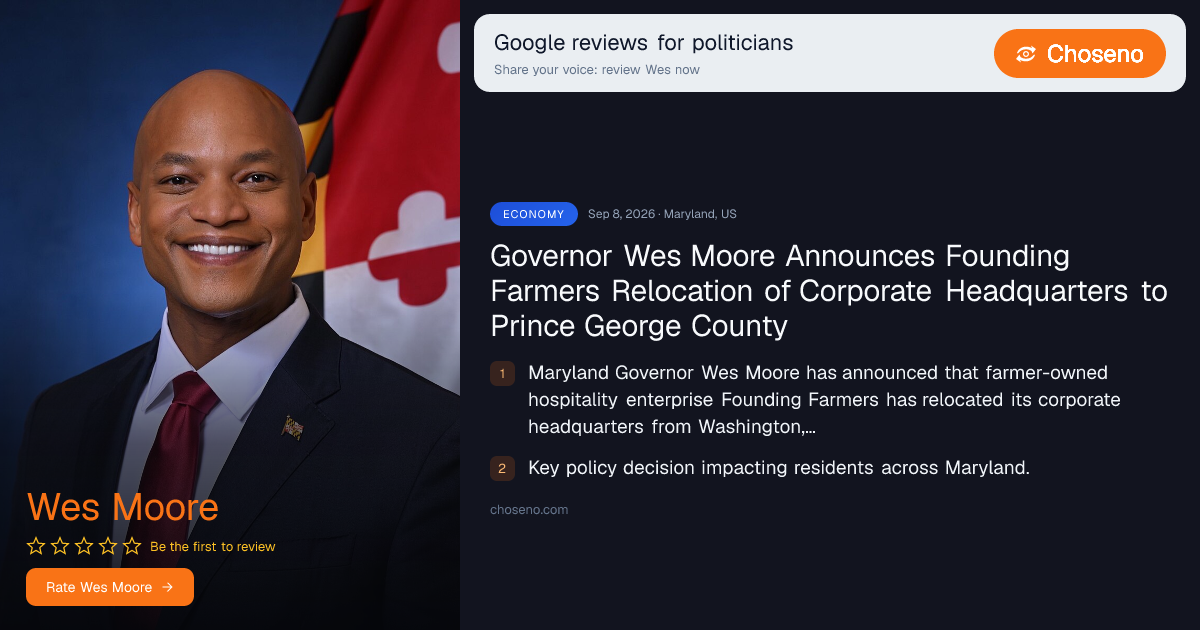
Governor Wes Moore Announces Founding Farmers Relocation of Corporate Headquarters to Prince George County
Maryland Governor Wes Moore has announced that farmer-owned hospitality enterprise Founding Farmers has relocated its corporate headquarters from Washington, D.C. to District Heights in Prince George County, establishing an operational hub supported by state and county economic development loans that will generate over ninety full-time positions.
Read full article
Economy
CA Sep 3, 2026
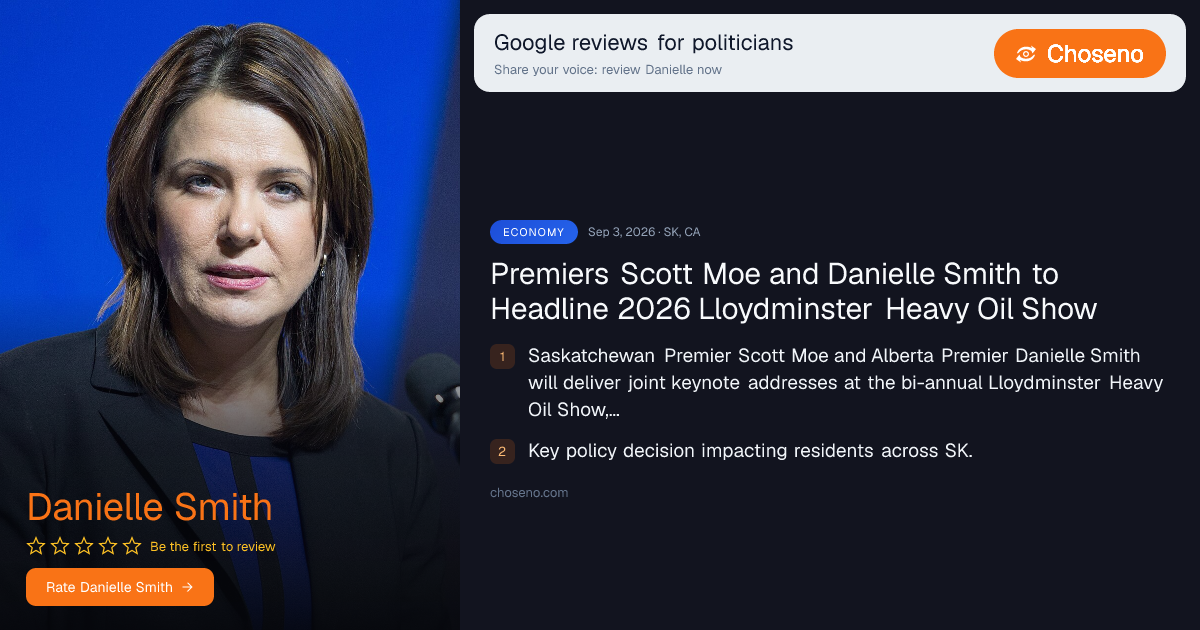
Premiers Scott Moe and Danielle Smith to Headline 2026 Lloydminster Heavy Oil Show
Saskatchewan Premier Scott Moe and Alberta Premier Danielle Smith will deliver joint keynote addresses at the bi-annual Lloydminster Heavy Oil Show, championing interprovincial energy integration, carbon capture investments, and Western Canadian resource sovereignty.
Read full article
Economy
CA Sep 3, 2026
Skeena MLA Claire Rattée Warns Regulatory Ambiguity and Permitting Delays Are Stalling Northern B.C. Investment
Skeena MLA Claire Rattée has raised alarms over capital flight across northwestern British Columbia, warning that shifting provincial regulatory regimes and multi-year environmental permitting delays are undermining critical mineral, forestry, and energy development from Terrace to Kitimat.
Read full article