Governor Ron DeSantis Establishes National Association to Promote Florida Election Standards
Florida Governor Ron DeSantis announced the formation of the Association of State and Local Election Officials to export Florida statutory voting administration models and election crime enforcement to other states.
Choseno Civic News Desk September 25, 2026 3 min read Florida, US
Florida Governor Ron DeSantis announced the establishment of a national coalition of voting administrators titled the Association of State and Local Election Officials, creating an interstate professional network dedicated to promoting Florida statutory election administration policies, voter roll maintenance standards, and specialized criminal enforcement mechanisms across other state jurisdictions. Speaking during executive proceedings in Tallahassee alongside state election officials, the governor affirmed that Florida rigorous statutory framework serves as the national gold standard for transparent, secure, and verifiable balloting. Under the executive framework, Florida Secretary of State Cord Byrd will lead the organizational effort, with formal multistate advisory operations scheduled to commence immediately following the conclusion of the upcoming November general election.
The launch coincided with the announcement of twenty new statutory election fraud indictments secured by the Florida Office of Election Crimes and Security, a specialized executive investigative division established under state law in twenty twenty-two. Governor DeSantis pointed to the state enforcement record, highlighting that dedicated investigators and specialized prosecutors have successfully initiated over one hundred criminal actions targeting illegal voting practices, non-citizen registration attempts, and unauthorized ballot collection operations. The governor maintained that proactive criminal enforcement serves as an indispensable deterrent against fraudulent activity, ensuring that public confidence in election integrity remains steadfast among everyday citizens across all communities.
The newly created association aims to provide educational training, administrative benchmarks, and model statutory language to county supervisors of elections, municipal election clerks, and state legislative committees across the country. Specific policy priorities promoted under the Florida model include comprehensive voter identification mandates, continuous statewide scrubbing of deceased or relocated individuals from active registration files, prohibitions on non-governmental funding for municipal election administration, and strict security protocols governing absentee mail ballot distribution and collection.
Civil rights advocates, voting rights organizations, and progressive legal coalitions expressed sharp skepticism regarding the initiative, arguing that Florida election administration policies disproportionately disenfranchise minority communities, elderly voters, and returning citizens navigating complex legal restoration procedures. Critics pointed out that aggressive publicity surrounding election crime arrests creates a chilling effect that discourages lawful eligible citizens from participating in democratic processes. Legal scholars noted that several statutory voting restrictions enacted in Florida have faced recurring constitutional challenges in federal courts regarding equal protection and voting rights protections.
County election administrators across Florida offered differing perspectives, acknowledging that updated electronic voting technology and strict chain-of-custody protocols facilitate timely and accurate election night reporting. Supervisors emphasized that adequate statutory funding for local canvassing boards, secure voting tabulators, and professional poll worker recruitment remain the foundational elements required to deliver smooth and transparent election administration.
Governor DeSantis affirmed that the administration remains resolute in expanding election integrity initiatives beyond state borders, asserting that transparent election outcomes are indispensable to preserving constitutional self-governance. The governor pledged that Florida will continue to provide structural leadership and technical assistance to states seeking to modernize voting administration, eliminate bureaucratic vulnerabilities, and protect democratic legitimacy across all fifty states.
State legislative leaders from several southern and midwestern states have already requested consultative briefings with the new association, signaling plans to introduce Florida-style election security statutes during upcoming winter legislative sessions.
Topics
Rate the people mentioned in this article

Related Coverage in General
See all General newsGeneral
US Sep 25, 2026
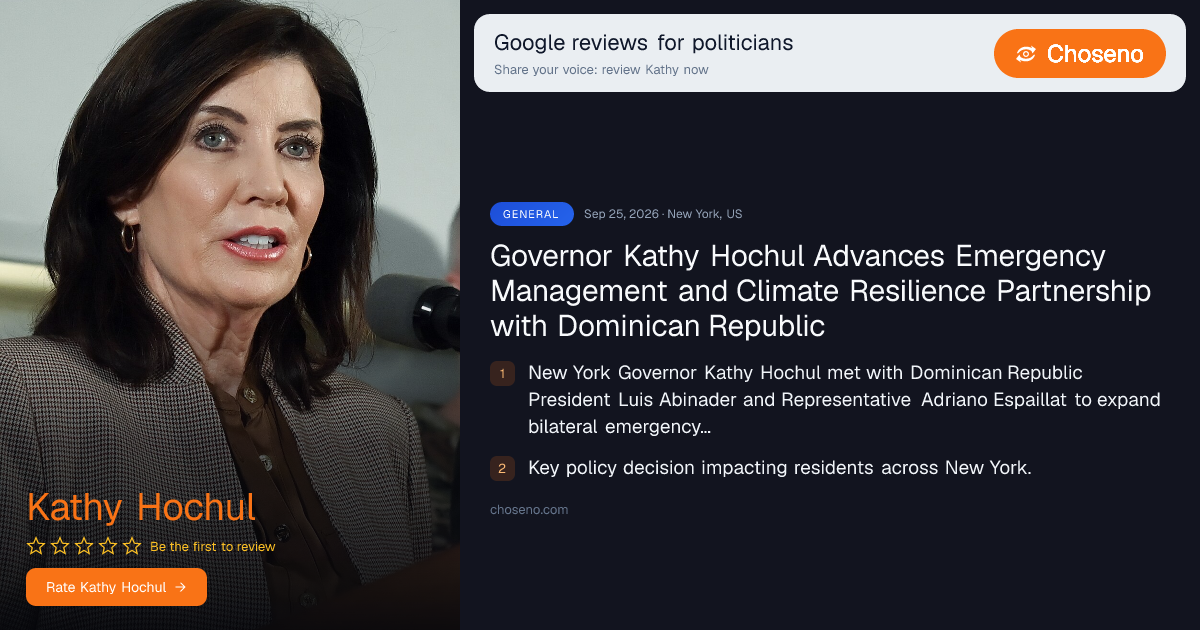
Georgia Gubernatorial Nominees Clash Over Agricultural Relief and Farm Production Safeguards
Candidates seeking to succeed term-limited Governor Brian Kemp outlined comprehensive agricultural blueprints targeting escalating input costs, diesel taxation relief, water allocations, and family farm preservation.
Read full article
General
US Sep 25, 2026
Oregon Gubernatorial Candidates Kotek and Drazan Present Contrasting Economic Platforms in Rematch Forum
Oregon Governor Tina Kotek and Republican challenger Christine Drazan outlined starkly different economic blueprints regarding commercial regulations, tax structures, and industrial competitiveness at a Portland business forum.
Read full article
General
US Sep 25, 2026
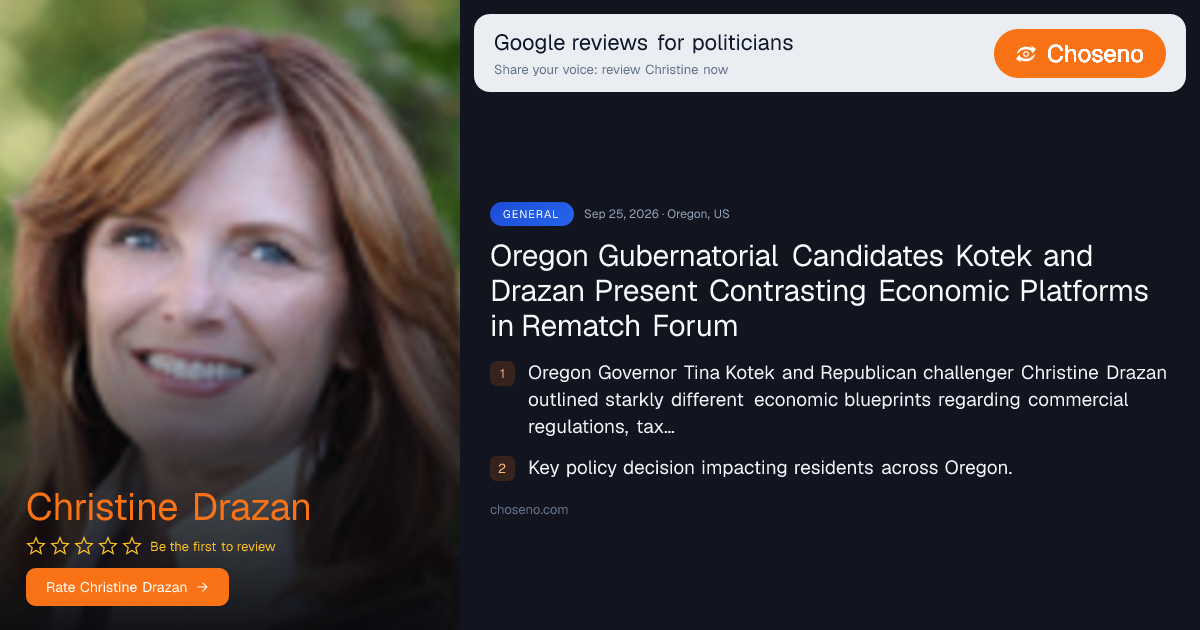
Governor Kathy Hochul Advances Emergency Management and Climate Resilience Partnership with Dominican Republic
New York Governor Kathy Hochul met with Dominican Republic President Luis Abinader and Representative Adriano Espaillat to expand bilateral emergency management cooperation, training exchanges, and environmental resilience.
Read full article