Representative Don Bacon Prepares Coalition for Traditional Conservative in 2028 Presidential Primary
Nebraska Representative Don Bacon has announced plans to organize support for a traditional conservative candidate in the 2028 Republican presidential primary, promoting Reagan-era values of strong defense, fiscal discipline, and institutional stability.
Choseno Civic News Desk September 7, 2026 3 min read Nebraska, US
What do you think of the people in this story? Rate them anonymously — tap a face below.
Nebraska Representative Don Bacon has begun laying the groundwork to endorse and organize support for a traditional conservative candidate in the 2028 Republican presidential primary, signaling a deliberate effort by institutional Republicans to reclaim ideological leadership within the national party. The retired Air Force brigadier general, who has represented Nebraska's politically competitive Second Congressional District centered on Omaha, indicated that his post-congressional political activity will focus on revitalizing Reagan-era conservative principles, centered on fiscal discipline, strong international defense alliances, and constructive legislative governance across all branches of government.
Representative Bacon explained that the future electoral viability of the Republican Party depends on rebuilding durable coalitions capable of securing suburban and independent voters who have grown alienated by populist rhetoric and disruptive governing tactics. He observed that while populist energy has dominated recent party conventions and primary contests, enduring legislative majorities require an affirmative policy vision rooted in institutional stability, respect for constitutional checks and balances, and predictable economic stewardship that reassures financial markets and working families alike.
As potential flagbearers for this traditional governing philosophy, Bacon pointed to national figures such as Virginia Governor Glenn Youngkin and former United Nations Ambassador Nikki Haley. He remarked that executive leaders who have demonstrated an ability to enact conservative fiscal policies, reduce state regulatory burdens, and expand educational opportunities while maintaining broad public appeal offer a compelling template for national leadership. According to Bacon, state-level executives who prioritize practical problem-solving over cultural confrontation demonstrate that conservative principles remain broadly popular when paired with competent administration and civic dignity.
A central pillar of Bacon's critique involves the ongoing shift within segments of the Republican Party away from internationalist foreign policy and market-oriented trade agreements. The Nebraska lawmaker warned that retreating from historic commitments to the North Atlantic Treaty Organization and imposing sweeping across-the-board tariffs would undermine American geopolitical stability and harm domestic agricultural and manufacturing export sectors. Having served on the House Armed Services Committee throughout his tenure in Washington, Bacon stressed that maintaining robust deterrence against strategic adversaries requires reliable alliances and steady American leadership on the global stage.
Bacon's strategic positioning comes as he prepares to conclude his tenure in the House of Representatives, having announced that he would not seek reelection to his swing-district seat. Rather than stepping away from national politics entirely, Bacon expressed an intention to utilize political action committees, grassroots policy forums, and donor networks to cultivate, finance, and elevate primary contenders who share his commitment to constitutional governance and international security. He suggested that establishing an organized institutional framework well before the 2028 nominating cycle begins is essential to countering insular party trends and ensuring that center-right voters have a credible, well-resourced alternative.
The impending 2028 contest represents a defining crossroads for the Republican coalition as various ideological factions vie to define the post-Trump era. By articulating a clear defense of conventional conservatism and rallying party donors and grassroots organizers around establishment candidates, Bacon aims to demonstrate that a platform based on fiscal restraint, defense readiness, and institutional decorum remains the most reliable path toward national governance and sustained electoral success.
Rate the people mentioned in this article


Related Coverage in General
See all General newsGeneral
US Sep 25, 2026
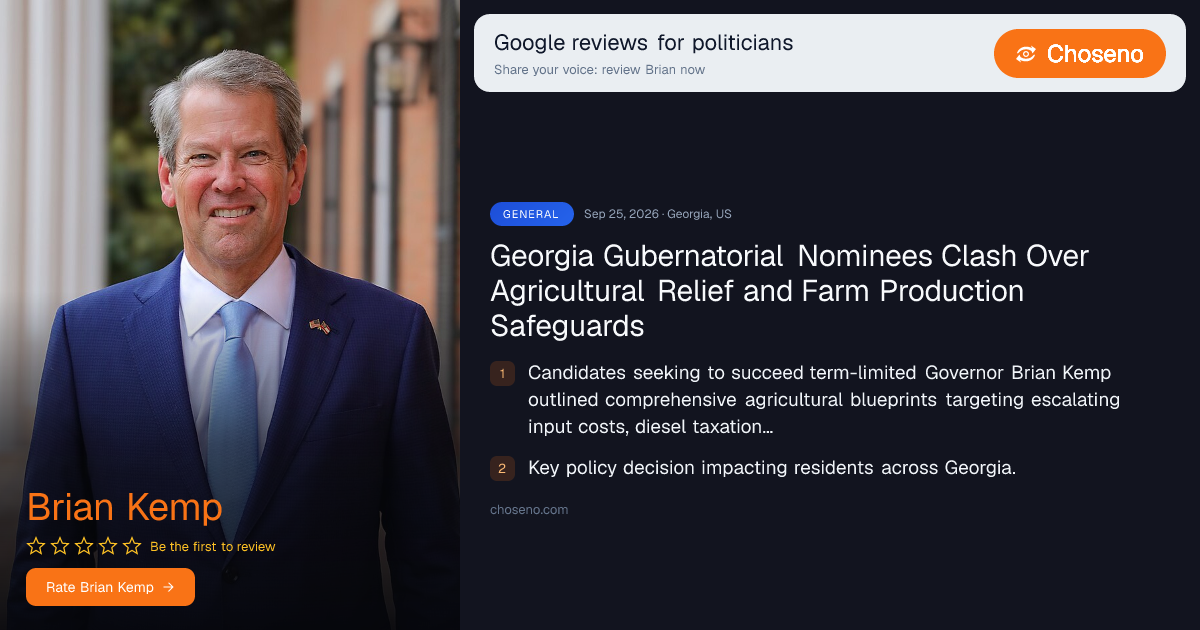
Georgia Gubernatorial Nominees Clash Over Agricultural Relief and Farm Production Safeguards
Candidates seeking to succeed term-limited Governor Brian Kemp outlined comprehensive agricultural blueprints targeting escalating input costs, diesel taxation relief, water allocations, and family farm preservation.
Read full article
General
US Sep 25, 2026
Oregon Gubernatorial Candidates Kotek and Drazan Present Contrasting Economic Platforms in Rematch Forum
Oregon Governor Tina Kotek and Republican challenger Christine Drazan outlined starkly different economic blueprints regarding commercial regulations, tax structures, and industrial competitiveness at a Portland business forum.
Read full article
General
US Sep 25, 2026
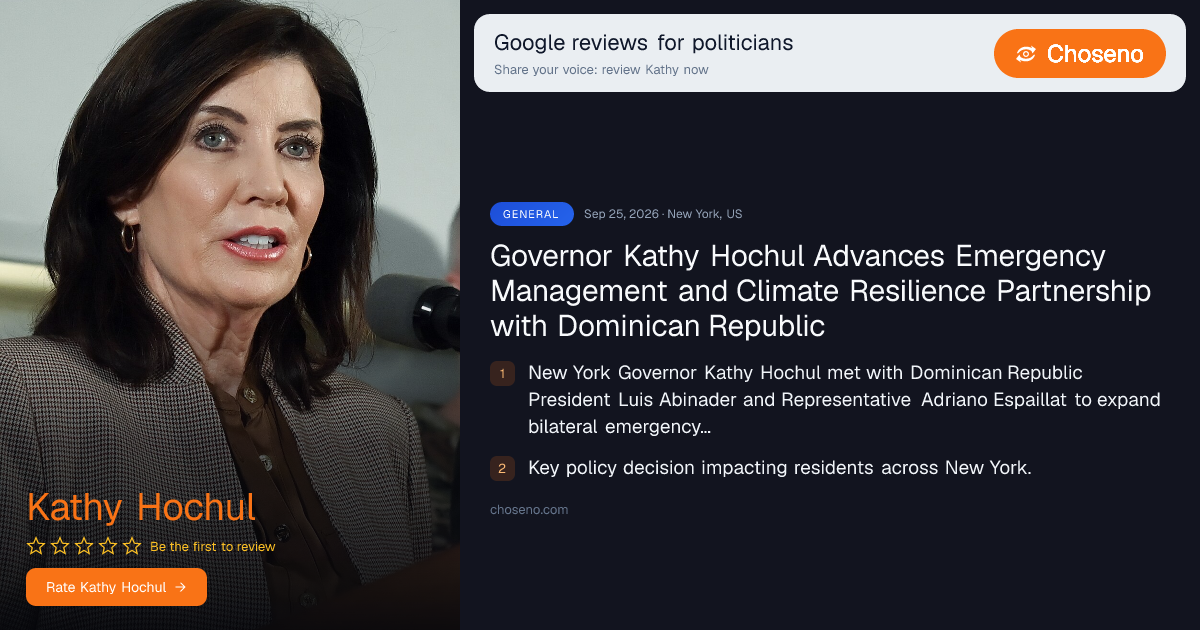
Governor Kathy Hochul Advances Emergency Management and Climate Resilience Partnership with Dominican Republic
New York Governor Kathy Hochul met with Dominican Republic President Luis Abinader and Representative Adriano Espaillat to expand bilateral emergency management cooperation, training exchanges, and environmental resilience.
Read full article