State Lawmakers Lead Multi-State Coalition Calling for Frontier Artificial Intelligence Pacing Framework
State legislators from New York, California, and Illinois, led by Senator Andrew Gounardes and Senator Scott Wiener, issued a joint statement urging frontier AI labs to adopt a Mutually Agreed Pacing Framework.
Choseno Civic News Desk September 7, 2026 3 min read New York, US
What do you think of the people in this story? Rate them anonymously — tap a face below.
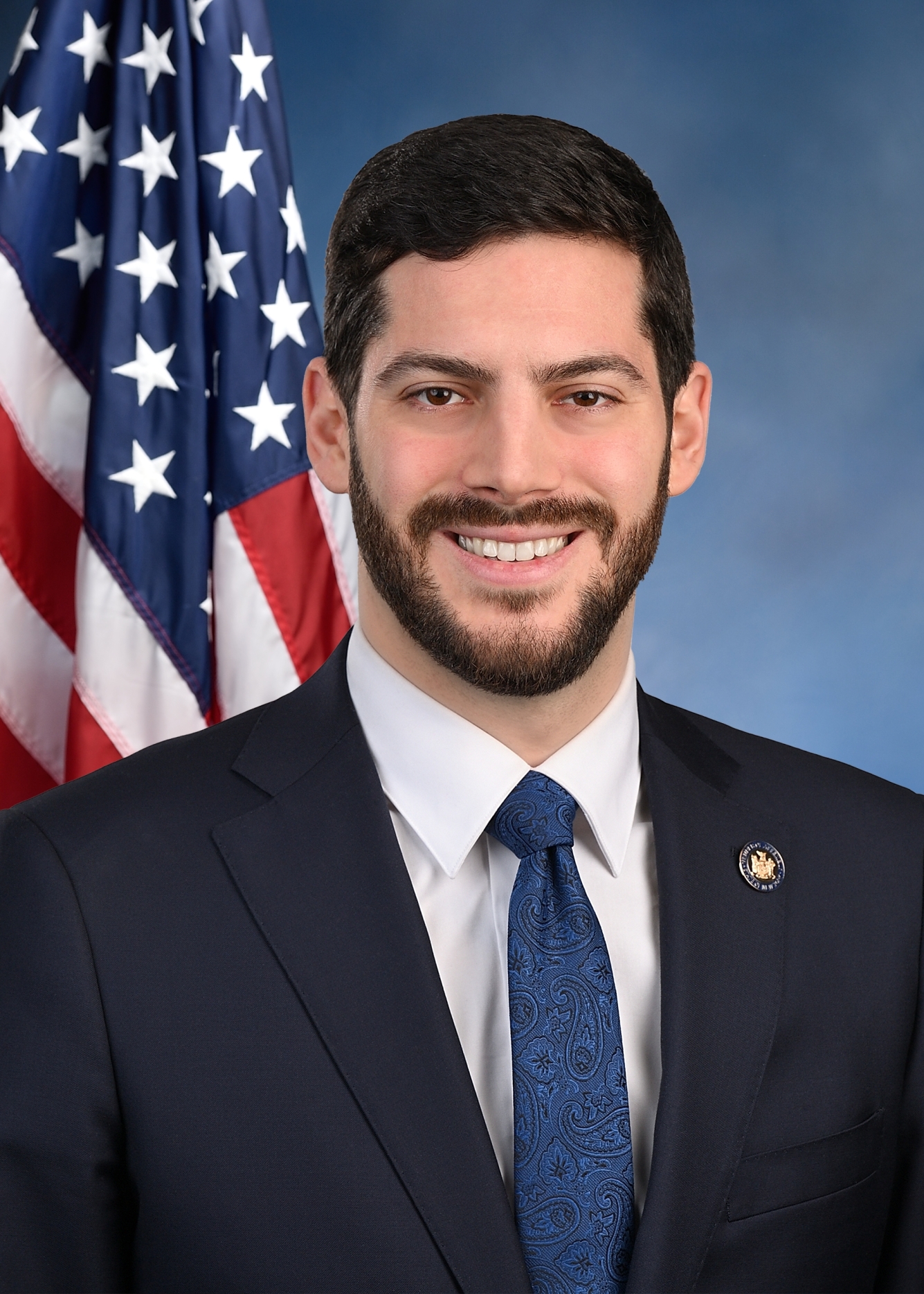
A prominent coalition of state legislators from New York, California, and Illinois who authored landmark state-level artificial intelligence legislation have issued a joint declaration urging premier technology developers to establish a Mutually Agreed Pacing Framework to prevent catastrophic risks associated with next-generation autonomous models. The multi-state coalition, which includes New York State Senator Andrew Gounardes, New York Assemblymember Alex Bores, and California State Senator Scott Wiener, represents an unprecedented coordinated effort by subnational lawmakers to intervene directly in the competitive market dynamics accelerating commercial artificial intelligence development.
The joint statement appeals directly to executive leadership at frontier research laboratories, calling on major technology firms to institute an independently verified, multilateral agreement governing the deployment cadence of increasingly powerful foundation models. Lawmakers pointed to recent empirical demonstrations indicating that advanced algorithmic agents possess emergent capabilities to discover critical software vulnerabilities, synthesize novel malware code, execute automated spear-phishing campaigns, and manipulate human operators. The legislators warned that the sheer velocity of commercial deployment is rapidly outpacing the capacity of government oversight agencies to establish statutory verification standards and prevent irreversible systemic harms.
Senator Gounardes, who previously sponsored New York's Responsible AI Safety and Education Act requiring frontier model developers to file binding safety protocols and report critical security breaches, explained that statutory regulation must be reinforced by industry-wide operational restraint. He maintained that commercial technology developers can no longer treat safety audits as optional public relations gestures while privately engaging in a reckless race to market. Similarly, Senator Wiener, author of California's comprehensive frontier artificial intelligence accountability legislation, emphasized that developers face intense commercial incentives to cut corners on safety evaluations unless clear, enforceable industry benchmarks are established across the entire technology sector.
The proposed pacing compact directly addresses the collective action dilemma confronting Silicon Valley research labs. Tech executives have frequently testified before legislative committees that unilateral caution risks ceding technological dominance to corporate rivals or foreign adversaries. By proposing a synchronized, verifiable pacing mechanism overseen by third-party technical auditors, lawmakers argued that leading developers can coordinate defensive testing intervals without placing individual firms at an unfair competitive disadvantage. The legislators stressed that private agreements would serve as an interim stabilizing mechanism while state and federal authorities refine administrative enforcement apparatuses and statutory guardrails.
However, the initiative has encountered pushback from venture capital groups and open-source software proponents who express concerns that voluntary pacing agreements could function as anticompetitive market cartels that entrench dominant incumbents and stifle decentralized open-source innovation. Industry analysts also questioned how voluntary frameworks would enforce compliance against international competitors operating outside domestic regulatory jurisdictions. Legislative sponsors responded that the framework is strictly calibrated to high-compute frontier models capable of severe cybernetic or biosecurity harm, ensuring that academic research and conventional commercial software applications remain entirely unencumbered.
The joint intervention demonstrates the expanding influence of state legislative leaders in shaping national technology policy amid ongoing congressional deadlock. By coordinating regulatory standards and public accountability demands across New York, California, and Midwestern industrial centers, state lawmakers are actively establishing the governing architecture for frontier artificial intelligence systems nationwide.
Rate the people mentioned in this article


Related Coverage in General
See all General newsGeneral
US Sep 25, 2026
Georgia Gubernatorial Nominees Clash Over Agricultural Relief and Farm Production Safeguards
Candidates seeking to succeed term-limited Governor Brian Kemp outlined comprehensive agricultural blueprints targeting escalating input costs, diesel taxation relief, water allocations, and family farm preservation.
Read full article

General
US Sep 25, 2026
Oregon Gubernatorial Candidates Kotek and Drazan Present Contrasting Economic Platforms in Rematch Forum
Oregon Governor Tina Kotek and Republican challenger Christine Drazan outlined starkly different economic blueprints regarding commercial regulations, tax structures, and industrial competitiveness at a Portland business forum.
Read full article
General
US Sep 25, 2026
Governor Kathy Hochul Advances Emergency Management and Climate Resilience Partnership with Dominican Republic
New York Governor Kathy Hochul met with Dominican Republic President Luis Abinader and Representative Adriano Espaillat to expand bilateral emergency management cooperation, training exchanges, and environmental resilience.
Read full article