132 stories mentioning David Eby
ICBC, the Conservative $1,000 tax cut, the NDP top-earner tax and a dropped candidate dominated the BC election conversation this week. Here is what each fight is about.
B.C. votes Oct. 24 in a snap election. Why choosing carefully matters in a democracy, and where to find each party's positions and what voters say on both sides.
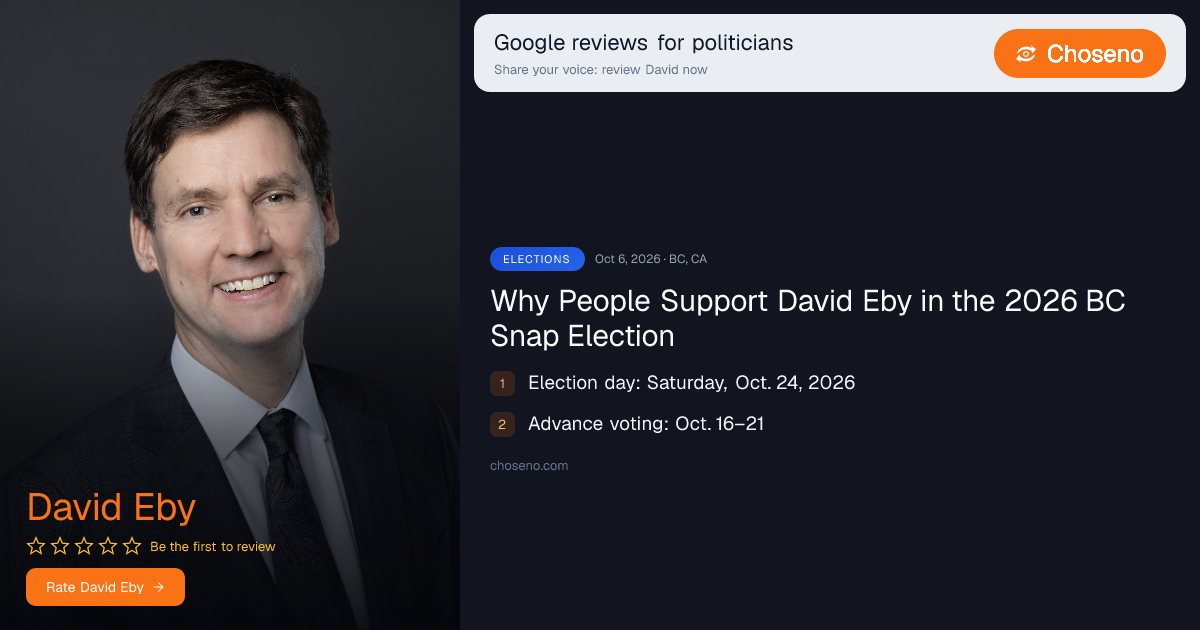
What voters say they like about Premier David Eby and the BC NDP ahead of Oct. 24: housing, health care, cost of living and keeping the Conservatives out.
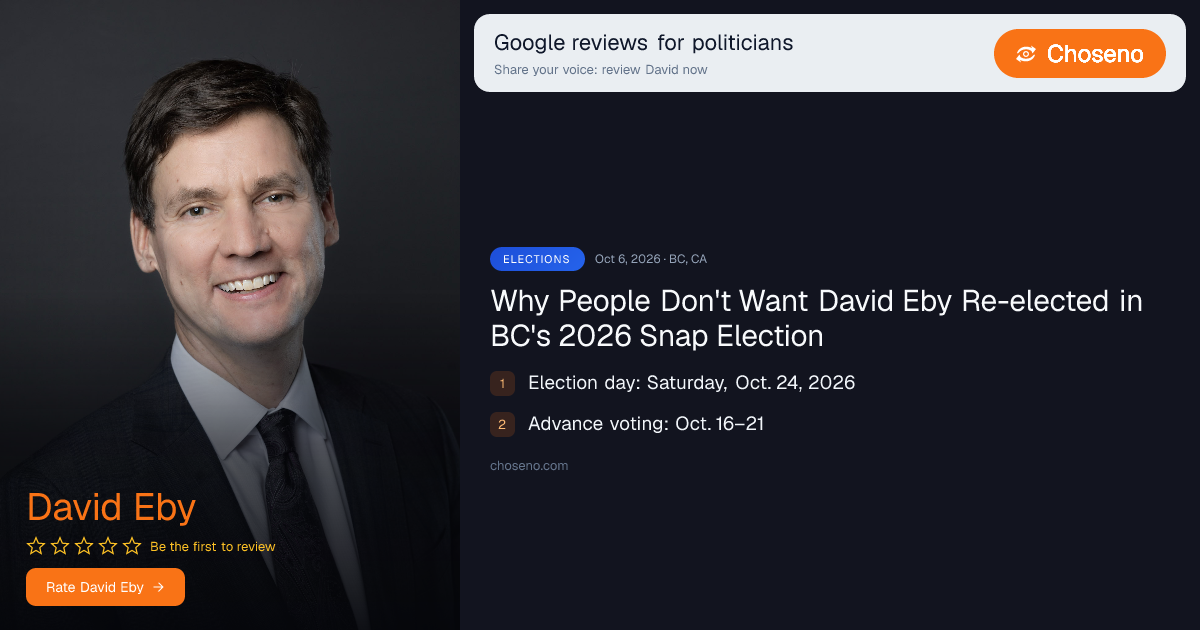
From the snap election call to a $190K tax bracket, deficits and drug policy: the most common reasons voters say they won't back Premier David Eby on Oct. 24.
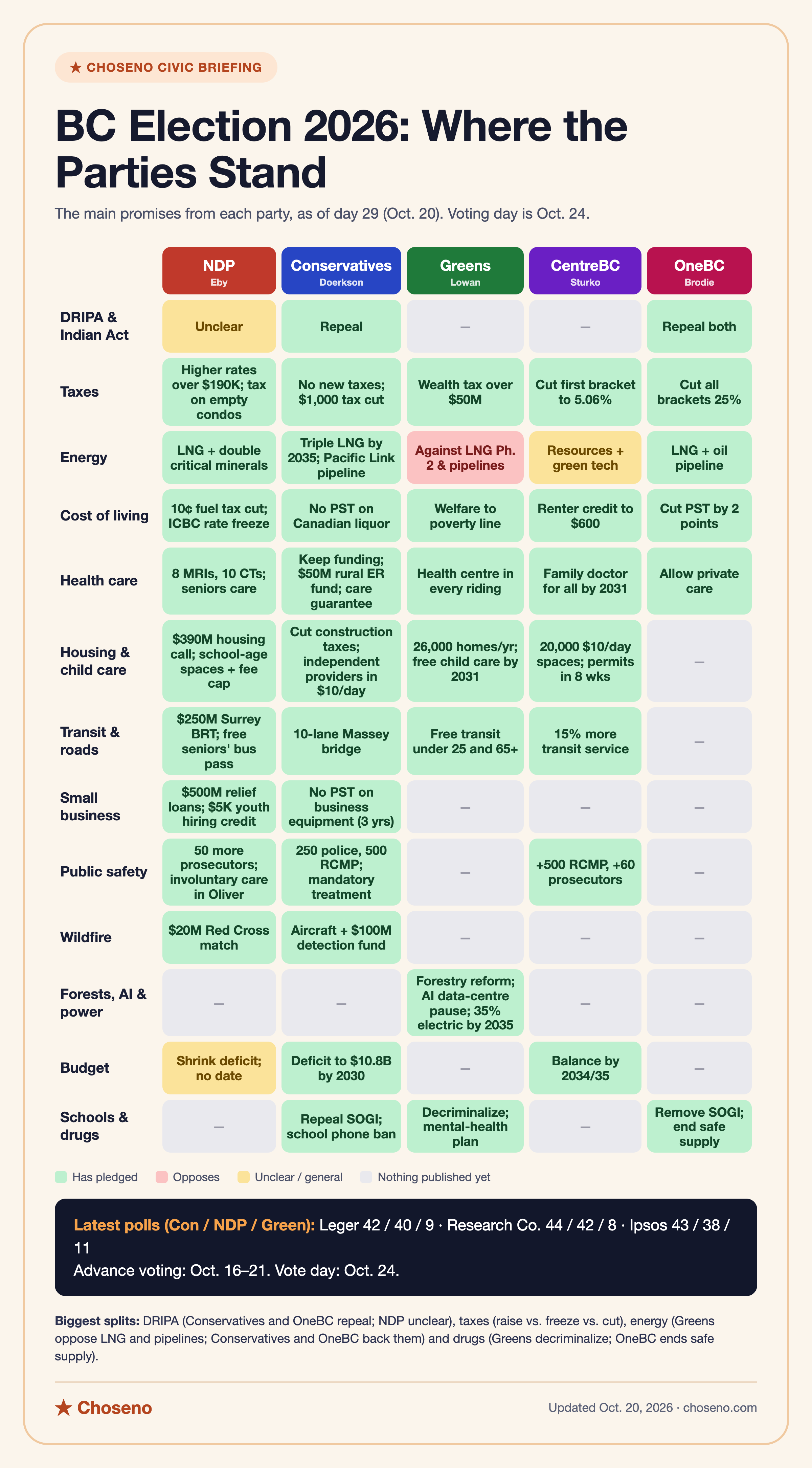
Twenty-nine days into B.C.'s snap election, with advance voting under way, here's what the NDP, Conservatives, Greens, CentreBC and OneBC have pledged on taxes, health care, housing, child care, farmland and costing — updated Oct. 20.
EDITORIAL: Has David Eby done a David Peterson? Toronto Sun
A British Columbia mayoral candidate has publicly criticized the provincial government for initiating an early election, labeling the decision as a self-serving maneuver that disrupts local governance. The critique highlights growing tensions between municipal leaders and provincial authorities regarding the prioritization of political strategy over public service stability.
A British Columbia mayoral candidate has publicly criticized the provincial government for initiating an early election, labeling the move as a self-serving political maneuver. The critique highlights growing tensions between local municipal authorities and provincial leadership regarding the prioritization of political strategy over stable governance.
As the provincial election cycle intensifies, current polling data suggests a highly competitive environment for Premier David Eby. The political discourse remains focused on the potential for a shift in governance as voters weigh the incumbent administration against an emerging field of challengers.
Vaughn Palmer: First few days of B.C. campaign a disaster for David Eby Vancouver Sun
David Eby calls for Snap election in BC on October 24, 2026 Link Newspaper
British Columbia Premier David Eby's strategic positioning regarding potential American political shifts has ignited fierce domestic debate over provincial priorities. Critics argue the posture exposes underlying vulnerabilities, while supporters view the preemptive diplomacy as a necessary defense of local economic interests.
British Columbia Premier David Eby has adopted a confrontational rhetorical stance toward potential American protectionist policies, sparking debate over the efficacy of such political maneuvering. Critics argue this approach reflects electoral anxiety, while supporters view it as a necessary defense of provincial economic interests.
Premier David Eby faces scrutiny over his aggressive political positioning regarding international figures and domestic policy. Critics argue these maneuvers reflect a broader struggle to maintain electoral momentum amidst shifting public sentiment.
British Columbia Premier David Eby is advancing aggressive fiscal interventions to penalize developers holding vacant new condominiums. The policy framework aims to redirect speculative inventory into the active housing market to alleviate severe affordability pressures.
The British Columbia NDP has unveiled a comprehensive housing strategy aimed at increasing inventory by taxing unsold condominium units and raising existing vacancy levies. These proposed fiscal adjustments seek to address the province's ongoing affordability crisis by discouraging developers from holding onto completed but unoccupied residential stock.
The British Columbia NDP has unveiled a comprehensive housing strategy featuring a new tax on unsold condominium inventory and an increase to the existing speculation and vacancy tax. These measures aim to incentivize developers to release housing supply more rapidly while discouraging the long-term holding of vacant residential units.
Premier David Eby and the BC NDP have announced a comprehensive housing policy package introducing a new tax on unsold newly constructed condominiums and substantial hikes to the existing speculation and vacancy tax. The measures aim to discourage housing hoarding and accelerate inventory release across high-demand urban markets in British Columbia.
Could the B.C. election be David Eby’s biggest blunder? Juno News
Premier David Eby faces intense scrutiny over the timing of legislative shifts that critics argue undermine the transparency of the democratic process in British Columbia. The controversy centers on whether executive actions prioritize political convenience over the fundamental rights of the electorate to participate in informed governance.
Premier David Eby faces intense scrutiny regarding the timing of legislative shifts that critics argue undermine the transparency of the democratic process in British Columbia. This analysis examines the intersection of executive authority, electoral integrity, and the broader implications for taxpayer trust in provincial governance.
The Conservative Party of British Columbia is mounting a significant opposition to Premier David Eby’s provincial upzoning mandates, arguing that the top-down approach undermines local municipal autonomy. This conflict highlights a growing ideological divide regarding the balance between provincial housing targets and the preservation of neighborhood character.
An analytical look at the rising political friction in British Columbia as the provincial Conservative opposition challenges Premier David Eby and the governing New Democratic Party over aggressive municipal upzoning policies. The debate centers on municipal autonomy, housing supply strategies, and the fiscal impacts on suburban infrastructure.
This report examines the political and economic ramifications of Premier David Eby's recent legislative decisions. It analyzes how these executive actions have sparked intense public debate regarding fiscal responsibility and long-term governance.